Global Economy Under Pressure as Geopolitical Tensions and Trade Policies Drive Uncertainty
The global economy is entering a period of heightened uncertainty as geopolitical tensions and shifting trade policies increasingly disrupt traditional patterns of growth, investment, and international cooperation. While the world economy has shown resilience in recent years, policymakers, businesses, and investors are now facing a more fragile environment shaped by political rivalries, protectionist measures, and fragmented global supply chains.
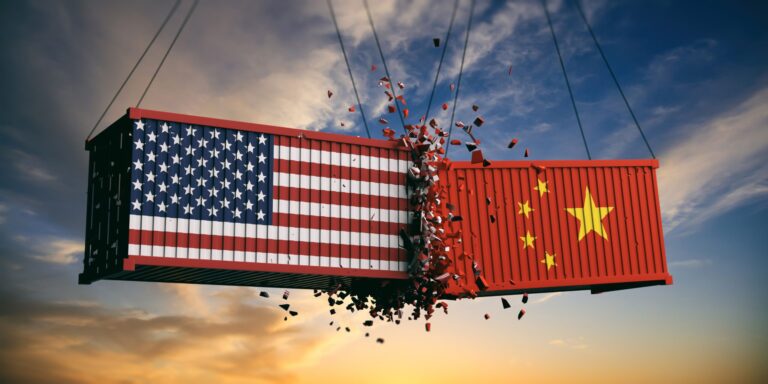
At the center of this uncertainty are geopolitical conflicts and strategic competition between major powers. Rivalries between the United States and China, ongoing tensions involving Russia, instability in parts of the Middle East, and regional conflicts across Eastern Europe and Asia have altered the global economic landscape. These developments are no longer confined to diplomacy or security; they are directly affecting trade flows, energy markets, commodity prices, and investor confidence.
One of the most visible consequences has been the reemergence of protectionist trade policies. Governments are increasingly prioritizing domestic industries, national security, and supply chain resilience over free trade principles. Tariffs, export controls, and trade restrictions—once considered temporary tools—are becoming long-term features of economic policy. While supporters argue these measures protect strategic sectors and reduce dependence on geopolitical rivals, critics warn they raise costs, reduce efficiency, and slow global growth.
Global trade volumes have already begun to feel the impact. Companies that once relied on highly integrated international supply chains are now diversifying production, reshoring operations, or shifting manufacturing to politically aligned countries. This process, often described as “de-risking” or “friend-shoring,” aims to reduce vulnerability to geopolitical shocks but comes at a significant cost. Redundant supply chains, higher labor expenses, and increased logistical complexity are putting pressure on corporate margins and, ultimately, consumer prices.
Emerging markets are particularly exposed to these shifts. Many developing economies depend heavily on exports, foreign investment, and stable access to global markets. As trade barriers rise and capital flows become more selective, these countries face growing challenges in sustaining growth. At the same time, higher global interest rates and a strong U.S. dollar have tightened financial conditions, increasing debt-servicing costs and limiting fiscal flexibility.
Energy and commodities have also become key sources of volatility. Geopolitical risks continue to influence oil, gas, and critical mineral markets, creating price swings that ripple through the global economy. Energy-importing nations face higher costs, while exporters grapple with uncertainty over long-term demand and regulatory changes. These dynamics complicate inflation management for central banks, many of which are already navigating the delicate balance between controlling prices and supporting economic growth.
Despite these headwinds, the global economy has not collapsed. Strong labor markets in several advanced economies, technological innovation, and continued growth in parts of Asia—particularly India and Southeast Asia—have provided some support. However, economists warn that resilience should not be confused with strength. Growth rates are slowing compared to pre-pandemic trends, and the margin for policy error is narrowing.
Another critical issue is the erosion of international economic cooperation. Institutions that once played a central role in coordinating global responses—such as the World Trade Organization and multilateral development banks—are struggling to adapt to a more fragmented world. Without coordinated action, responses to crises such as supply disruptions, financial instability, or climate-related shocks risk becoming slower and less effective.
For businesses and investors, uncertainty has become the defining theme. Long-term investment decisions are increasingly shaped by political risk assessments, regulatory unpredictability, and the potential for sudden policy shifts. While some sectors, such as defense, energy transition technologies, and domestic manufacturing, may benefit from this environment, others face reduced growth prospects and higher operating risks.
Looking ahead, the trajectory of the global economy will depend largely on how governments manage these challenges. A further escalation of geopolitical conflicts or trade wars could significantly undermine global growth and financial stability. Conversely, even limited progress toward dialogue, trade normalization, or cooperative frameworks could help restore confidence and reduce volatility.
In conclusion, the global economy is under mounting pressure from geopolitical tensions and trade policy uncertainty. While growth continues, it is increasingly fragile and uneven. The coming years are likely to test the ability of nations to balance strategic interests with economic cooperation, shaping not only the pace of global growth but also the structure of the world economy itself.
Acerca del autor