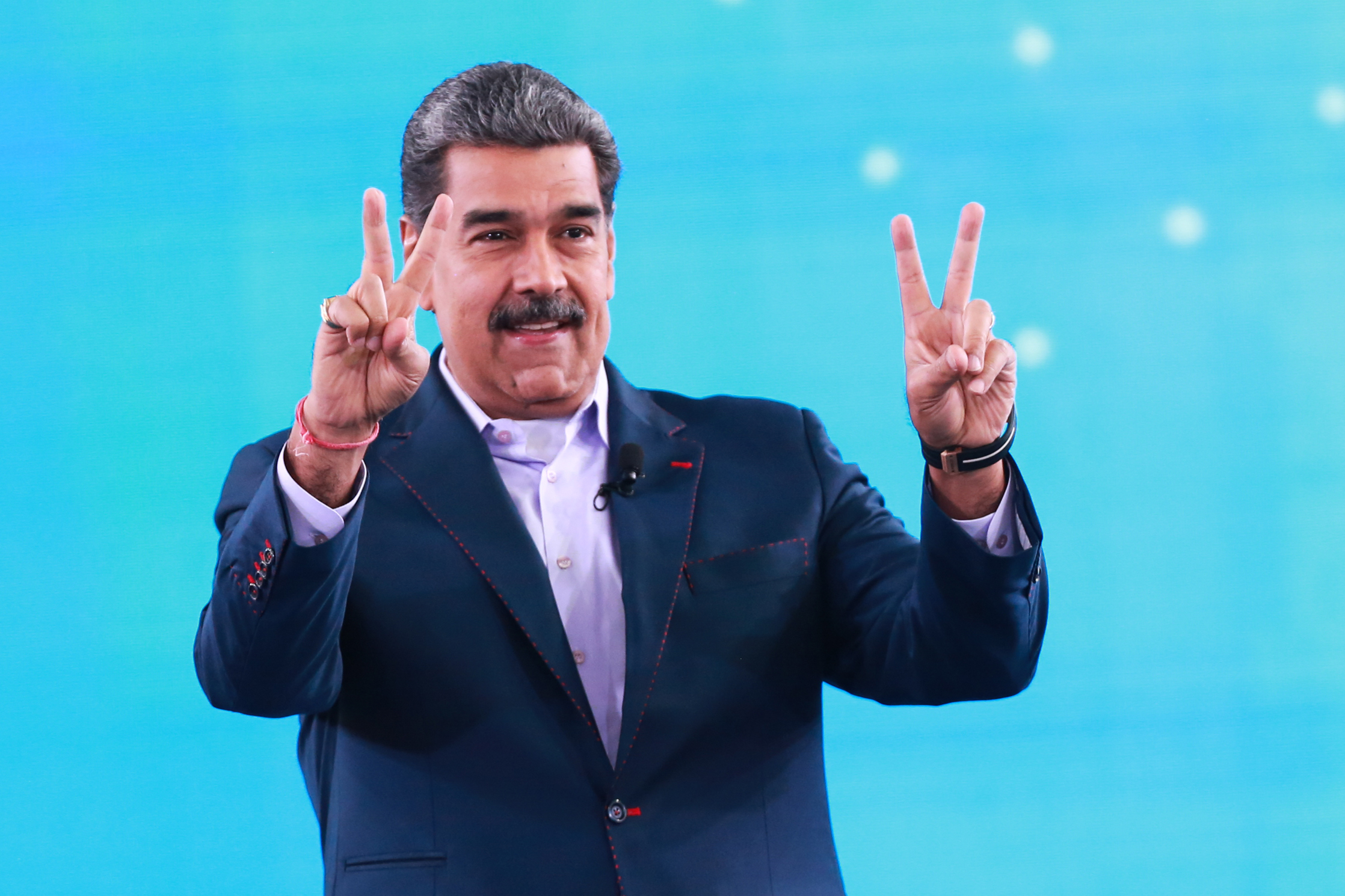
AME1169. CARACAS (VENEZUELA), 26/05/2025.- Fotografía cedida por Prensa del Palacio de Miraflores del presidente de Venezuela, Nicolás Maduro, durante su programa semanal de televisión "Con Maduro +" este lunes, en Caracas (Venezuela). Maduro quien juró para un tercer mandato tras su cuestionada reelección, anunció que el próximo 27 de julio el país celebrará una tercera consulta popular, en la que los jóvenes de 5.338 comunidades registradas escogerán proyectos financiados por el Estado. EFE/ Prensa Palacio de Miraflores/ SOLO USO EDITORIAL/SOLO DISPONIBLE PARA ILUSTRAR LA NOTICIA QUE ACOMPAÑA (CRÉDITO OBLIGATORIO)
Former U.S. President Donald Trump has ignited global controversy after claiming that U.S. forces captured Venezuelan President Nicolás Maduro and his wife, Cilia Flores, during what he described as a large-scale military attack inside Venezuela. The statement, delivered publicly and echoed across social media, has drawn intense international attention, prompted calls for verification, and raised urgent questions about legality, credibility, and geopolitical fallout.
Trump’s Claim and the Alleged Operation
According to Trump, the operation was executed by U.S. special forces and resulted in the removal of Maduro and Flores from Venezuelan territory. He characterized the mission as “decisive” and “carefully planned,” asserting it aimed to end what he called an illegitimate regime and restore stability to the country. Trump offered no operational details, timelines, or evidence to support the claim, but framed the alleged action as a turning point for Venezuela and U.S. foreign policy in the region.
Notably, no confirmation has been issued by the current U.S. administration, the Department of Defense, or other official agencies. The lack of corroboration has led many analysts to treat the claim with caution, emphasizing that such an operation—if true—would represent one of the most dramatic escalations in U.S.–Venezuela relations in decades.
Absence of Independent Verification
As of publication, independent verification remains unavailable. Venezuelan state media has continued regular programming, and there has been no official announcement acknowledging the capture of the president or first lady. Government-aligned sources in Caracas have dismissed Trump’s remarks as misinformation, while opposition voices have urged restraint until credible evidence emerges.
International observers underscore that capturing a sitting head of state would typically be accompanied by official statements, emergency diplomatic consultations, and visible changes in governance—none of which have been confirmed.
Reaction Inside Venezuela
Trump’s claim has nevertheless fueled uncertainty inside Venezuela. Reports from the capital suggest heightened security around government buildings and military installations. Social media activity reflects confusion among citizens, with rumors spreading rapidly amid a shortage of verified information.
Economists warn that even unverified reports of a foreign military operation can have real economic consequences, including pressure on the national currency, disruptions to supply chains, and renewed capital flight. Venezuela’s economy, already strained by years of sanctions and inflation, remains highly sensitive to geopolitical shocks.
International and Regional Response
Global reaction has been swift but cautious. Several governments in Latin America and Europe have called for respect for Venezuelan sovereignty and urged all parties to avoid escalation. Diplomatic sources stress the importance of confirmation from official channels before drawing conclusions.
At the United Nations, officials reiterated the need for peaceful solutions and adherence to international law. Allies of the United States privately expressed concern over the implications of any unilateral military action in the region, particularly without multilateral support or clear legal justification.
Legal and Constitutional Questions
If Trump’s claim were substantiated, the legal ramifications would be profound. Under international law, the capture of a foreign head of state raises complex issues related to sovereignty, the use of force, and the treatment of detainees. Such actions are typically governed by strict legal frameworks and require authorization from current executive authorities.
Domestically, the issue would likely trigger intense scrutiny in Washington. Lawmakers would demand clarity on authorization, oversight, and compliance with U.S. law. Legal experts note that any operation of this magnitude would ordinarily involve Congress and the sitting administration—factors that have not been acknowledged.
Political Context and Strategy
Observers point out that Trump’s statement aligns with his long-standing hardline rhetoric toward Venezuela. Throughout his presidency, he pursued maximum-pressure sanctions and publicly supported regime change, framing Maduro as a threat to regional stability.
Supporters view the claim as consistent with Trump’s image as a decisive leader willing to use force against authoritarian governments. Critics argue that unverified assertions risk destabilizing international relations, undermining U.S. credibility, and inflaming tensions at a sensitive geopolitical moment.
Market and Energy Implications
The announcement has also reverberated through financial markets. Venezuela holds some of the world’s largest proven oil reserves, and any confirmed military action involving its leadership could affect global oil prices, energy supply chains, and sanctions policy. Market analysts note that uncertainty alone can increase volatility, particularly in energy and emerging-market assets.
What to Watch Next
The coming hours and days will be critical. Analysts and diplomats are watching for:
- Official confirmation or denial from the current U.S. administration
- Statements from Venezuelan authorities or evidence of leadership change
- Emergency diplomatic meetings or UN consultations
- Market reactions, especially in oil and regional currencies
Until such confirmation emerges, experts caution against treating the claim as fact.
Conclusion
Trump’s assertion that U.S. forces captured Nicolás Maduro and his wife during a large-scale attack in Venezuela is among the most dramatic geopolitical claims in recent years. With no official verification and conflicting signals from Caracas, the situation remains fluid. Regardless of its ultimate veracity, the episode highlights how high-stakes statements can move markets, shape public opinion, and strain international relations—underscoring the need for verified information in moments of global tension.

Acerca del autor