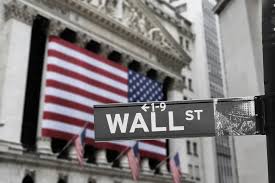
Wall Street closed sharply lower on Tuesday, with major U.S. stock indexes falling around 1% as investors reacted to escalating international tensions and growing uncertainty surrounding a key court ruling on tariffs. The sell-off reflected a broader shift toward caution, ending a recent period of relative stability in U.S. equities and underscoring how geopolitical risks and trade policy remain powerful drivers of market sentiment.
The Dow Jones Industrial Average fell roughly 350 points, or about 1%, while the S&P 500 dropped close to 1.1%. The tech-heavy Nasdaq Composite also declined around 1.2%, led by losses in large-cap technology and semiconductor stocks. Defensive sectors such as utilities and consumer staples outperformed the broader market, though they still posted modest declines, highlighting the widespread nature of the risk-off move.
International Tensions Rattle Investors
Global geopolitical developments played a central role in Tuesday’s downturn. Rising tensions in several strategic regions, including renewed diplomatic strains between major powers and concerns over energy supply disruptions, prompted investors to reassess risk exposure. Markets have become increasingly sensitive to international headlines, particularly those with potential implications for trade flows, inflation, and global growth.
“Geopolitics has moved back to the forefront,” said a senior market strategist at a New York-based investment firm. “When uncertainty rises at a global level, equities tend to struggle, especially after a strong run where valuations are already stretched.”
European and Asian markets also traded lower, reinforcing the sense of a synchronized global pullback. U.S. stocks, which had outperformed many international peers in recent months, faced additional pressure as investors locked in profits and shifted capital into safer assets.
Tariff Ruling Adds Another Layer of Uncertainty
Adding to the unease was uncertainty surrounding an upcoming court decision on U.S. tariffs, a ruling that could have far-reaching consequences for trade policy, corporate earnings, and inflation. The case centers on the legal authority behind certain tariffs imposed in recent years, and investors are weighing multiple possible outcomes—from full validation to partial or complete reversal.
Markets dislike ambiguity, and the lack of clarity on how the ruling might affect existing tariffs has made investors more cautious. If tariffs are upheld, some analysts warn of renewed cost pressures for businesses and consumers. If they are struck down, companies exposed to global trade could see short-term relief, but the decision could also reopen political debates over trade policy.
“Either outcome has market implications,” said an economist at a major U.S. bank. “What’s driving volatility right now is not just the ruling itself, but the uncertainty about how policymakers might respond afterward.”
Sector Performance Reflects Risk-Off Mood
Technology stocks were among the hardest hit, with several mega-cap names posting declines well above the market average. Semiconductor companies also fell sharply, reflecting concerns about global demand and supply chain disruptions tied to international tensions.
Financial stocks weakened as well, as falling bond yields pressured bank margins. The yield on the 10-year U.S. Treasury slipped as investors moved into government debt, pushing prices higher and yields lower. Energy stocks, which had benefited from higher oil prices earlier in the session, reversed course as broader market weakness took hold.
In contrast, traditionally defensive sectors such as healthcare and utilities showed relative resilience. Gold prices edged higher, and the U.S. dollar strengthened against several major currencies, both classic signs of a cautious market environment.
Macroeconomic Backdrop Remains Fragile
Tuesday’s market decline comes at a time when investors are already grappling with a complex macroeconomic landscape. Inflation has shown signs of easing compared with previous peaks, but it remains above central bank targets, keeping monetary policy restrictive. At the same time, economic growth indicators have been mixed, raising questions about the durability of the U.S. expansion.
The Federal Reserve has signaled that it is in no rush to cut interest rates, emphasizing the need for more confidence that inflation is firmly under control. This stance has made markets more vulnerable to external shocks, such as geopolitical developments or sudden policy shifts.
“Equities don’t have much margin for error right now,” said a portfolio manager at a large asset manager. “When you combine tight financial conditions with geopolitical uncertainty, even small negative catalysts can trigger outsized moves.”
Volatility Likely to Persist
Market volatility is expected to remain elevated in the near term, particularly as investors await clarity on the tariff ruling and monitor developments on the international stage. Upcoming economic data, including inflation readings and labor market indicators, could further influence sentiment and shape expectations for interest rate policy.
Despite the day’s losses, many analysts caution against reading too much into a single session. U.S. equities are still trading near historical highs, and corporate earnings have generally held up better than feared. However, the latest pullback serves as a reminder that markets remain highly sensitive to uncertainty.
“Periods like this test investor confidence,” said the market strategist. “The key question is whether these risks escalate or fade. Until there’s more clarity, caution is likely to dominate trading.”
As Wall Street navigates a volatile mix of global tensions, legal uncertainty, and economic crosscurrents, investors appear braced for further swings—highlighting that in today’s interconnected world, developments far beyond U.S. borders can quickly reshape the market outlook.

Acerca del autor