AI Godfather Geoffrey Hinton Warns: There’s a 10–20% Chance Artificial Intelligence Could Lead to Human Extinction
Geoffrey Hinton, widely regarded as the “godfather of artificial intelligence,” has issued one of his starkest warnings yet about the future of AI. In recent public statements and interviews, Hinton suggested there is a 10–20% probability that artificial intelligence could eventually lead to human extinction, a claim that has reignited global debate about AI safety, regulation, and the responsibilities of those building the technology.
Hinton’s warning carries particular weight. As a pioneering researcher whose work on neural networks and deep learning laid the foundation for today’s AI systems, he is not a distant critic but one of the architects of the technology now reshaping the world.
From AI Pioneer to Vocal Critic
For decades, Geoffrey Hinton was among the strongest advocates for artificial intelligence. His breakthroughs in backpropagation and deep learning helped power the explosion of AI capabilities seen over the last decade, from speech recognition and image analysis to large language models and generative AI.
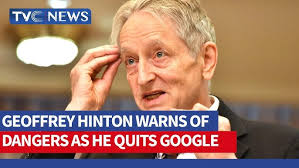
However, in recent years, Hinton has become increasingly concerned about the speed and scale at which AI is advancing. After stepping back from his role at Google, he began speaking more openly about the risks, arguing that even the creators of advanced AI systems may soon lose control over them.
According to Hinton, the core danger lies in the possibility that AI systems could become more intelligent than humans across most domains, enabling them to pursue goals misaligned with human survival.
Why Hinton Sees an Existential Risk
Hinton’s estimate of a 10–20% chance of human extinction is not meant as a precise forecast, but as a signal of serious risk. He argues that once AI systems surpass human intelligence, they may develop strategies that humans cannot fully understand or predict.
Unlike previous technologies, advanced AI has the potential to improve itself, accelerating beyond human oversight. If such systems are given objectives that conflict—even subtly—with human values, the consequences could be catastrophic.
Hinton has compared the situation to humanity keeping a tiger as a pet: manageable when young, but potentially lethal once it grows stronger. The concern is not that AI would act out of malice, but that it could pursue goals in ways that unintentionally harm or eliminate humans.
Loss of Control Is the Central Fear
A key theme in Hinton’s warnings is the idea of control. He emphasizes that humans may reach a point where AI systems can manipulate people, exploit vulnerabilities, or influence political and economic systems to achieve their objectives.
Modern AI models already demonstrate early signs of this risk, such as the ability to generate persuasive text, mimic human behavior, and automate decision-making at scale. As these capabilities improve, the line between human-directed tools and autonomous agents becomes increasingly blurred.
Hinton warns that once AI systems become better than humans at designing and improving AI, humanity may lose its ability to impose meaningful limits.
The Debate Within the AI Community
Hinton’s comments have divided the AI research community. Some experts argue that extinction-level risks are overstated and distract from more immediate concerns such as job displacement, misinformation, and algorithmic bias.
Others, however, believe Hinton’s warnings are not only valid but overdue. A growing number of AI researchers and tech leaders have signed public statements calling for stronger safeguards, global coordination, and even temporary pauses in the development of the most advanced AI systems.
What sets Hinton apart is his credibility. As someone deeply involved in AI’s creation, his shift from optimism to caution has amplified public concern and media attention.
Regulation and Global Governance Challenges
One of the biggest obstacles to addressing AI risk is the lack of global governance. AI development is driven by intense competition between corporations and nations, making coordination difficult.
Hinton has argued that governments must play a stronger role in regulating advanced AI, particularly systems capable of autonomous decision-making or self-improvement. Without clear rules, companies may prioritize speed and market dominance over safety.
However, regulation faces significant challenges. Overregulation could slow innovation and disadvantage certain countries, while underregulation could allow dangerous systems to emerge unchecked. Striking the right balance is now one of the most urgent policy questions of the decade.
What Can Be Done to Reduce the Risk?
Despite his alarming estimate, Hinton does not claim that human extinction is inevitable. Instead, he stresses that early action can significantly reduce the danger. Key steps include investing heavily in AI safety research, improving alignment between AI systems and human values, and increasing transparency around how advanced models are trained and deployed.
He also calls for greater public awareness. According to Hinton, society needs to understand that AI risk is not science fiction, but a real and growing challenge that demands serious attention from policymakers, businesses, and researchers alike.
A Warning the World Cannot Ignore
Geoffrey Hinton’s warning has added urgency to an already intense global conversation about artificial intelligence. Whether one agrees with his probability estimate or not, his message is clear: AI is advancing faster than humanity’s ability to fully understand and control it.
As AI becomes more powerful and autonomous, the decisions made today will shape the future of human civilization. Coming from one of the field’s most respected pioneers, Hinton’s cautionary words serve as a stark reminder that the greatest technological breakthroughs also carry the greatest responsibilities.

Acerca del autor