New York Stock Exchange Eyes 24/7 Trading and Stablecoin Payments in Bold Market Shift
The New York Stock Exchange (NYSE), the world’s largest and most influential stock market, is reportedly exploring a transformative shift that could redefine how global markets operate: 24/7 trading combined with the use of stablecoins for payments and settlement. If implemented, this move would mark one of the most significant structural changes in modern financial history, blurring the line between traditional finance and the always-on digital economy.
A Market That Never Sleeps
For more than two centuries, stock exchanges have operated on fixed schedules, shaped by geography, time zones, and human trading floors. Even in the digital age, U.S. equity markets still close on weekends and overnight, creating gaps where global investors must wait to react to breaking news.
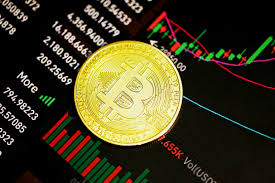
The NYSE’s interest in round-the-clock trading reflects a broader shift in investor behavior. Cryptocurrency markets already operate 24 hours a day, seven days a week, and have conditioned a new generation of traders to expect constant access. As global events unfold in real time—geopolitical tensions, economic data releases, or corporate announcements—pressure is mounting on traditional exchanges to keep pace.
A 24/7 NYSE would allow investors from Asia, Europe, and emerging markets to trade U.S. equities during their own business hours, potentially increasing liquidity, participation, and market efficiency.
Why Stablecoins Are Part of the Plan
Equally disruptive is the idea of using stablecoins for payments and settlement. Stablecoins—digital tokens typically pegged to fiat currencies like the U.S. dollar—have emerged as a bridge between traditional finance and blockchain-based systems. Unlike volatile cryptocurrencies, stablecoins are designed to maintain price stability, making them more suitable for financial infrastructure.
By integrating stablecoins, the NYSE could significantly reduce settlement times. Today, equity trades typically settle on a T+1 or T+2 basis, meaning it can take one or two business days for transactions to be finalized. Blockchain-based settlement using stablecoins could enable near-instant or same-day settlement, freeing up capital and reducing counterparty risk.
For institutional investors, faster settlement translates into improved capital efficiency. For the exchange itself, it could mean lower operational costs and a more resilient clearing system.
Competing With Crypto and Global Exchanges
The NYSE’s exploration of 24/7 trading and stablecoin payments is also a strategic response to growing competition. Crypto exchanges, decentralized finance (DeFi) platforms, and even some international stock markets are experimenting with extended trading hours and blockchain-based infrastructure.
Retail investors, particularly younger ones, increasingly favor platforms that offer continuous access and digital-native features. By modernizing its operations, the NYSE aims to remain relevant in a financial landscape where technology-driven alternatives are gaining traction.
At the same time, global exchanges in regions such as Asia and the Middle East are pushing innovation aggressively. A more flexible NYSE could strengthen its position as the central hub of global capital markets.
Regulatory Hurdles and Political Sensitivity
Despite its potential, the proposal faces significant regulatory challenges. The U.S. financial system is tightly regulated, and any use of stablecoins would require close coordination with regulators such as the Securities and Exchange Commission (SEC), the Federal Reserve, and the Treasury Department.
Stablecoins themselves remain a politically sensitive topic. While some are backed by fully reserved assets and regularly audited, others have raised concerns around transparency, systemic risk, and consumer protection. Regulators will likely demand strict safeguards, clear governance frameworks, and robust compliance measures before approving their use in a core financial institution like the NYSE.
Similarly, 24/7 trading raises questions about market stability, investor protection, and oversight. Regulators must consider how to monitor markets continuously, manage volatility during low-liquidity periods, and ensure fair access for all participants.
Implications for Investors and Companies
For investors, a nonstop NYSE could fundamentally change trading strategies. Earnings reports, macroeconomic data, and breaking news could be priced into stocks immediately, rather than waiting for the next opening bell. This may reduce overnight gaps but could also increase short-term volatility.
For listed companies, continuous trading may bring greater global visibility and liquidity, but also heightened scrutiny. Corporate disclosures and investor communications would need to account for a market that never closes.
Market makers and institutional traders would likely need to invest heavily in automation and AI-driven systems to operate effectively around the clock. Human traders, by contrast, may find their role further diminished as algorithms take center stage.
Technology as the Enabler
At the heart of this shift lies technology. Advances in cloud computing, blockchain infrastructure, and artificial intelligence have made it technically feasible to run a secure, scalable, and compliant 24/7 exchange.
Stablecoins, in particular, offer programmable features that could enable automated margining, corporate actions, and dividend payments. Combined with smart contracts, these tools could streamline processes that currently rely on multiple intermediaries.
However, technology also introduces new risks, including cybersecurity threats and system resilience concerns. Ensuring uptime, data integrity, and protection against attacks would be critical for any always-on exchange.
A Turning Point for Global Finance
While the NYSE has not announced a formal timeline, its reported interest in 24/7 trading and stablecoin settlement signals a clear direction: traditional finance is adapting to a digital-first, borderless world.
If successful, this transformation could set a precedent for stock exchanges worldwide, accelerating the convergence of traditional markets and digital assets. It would also challenge long-standing assumptions about how, when, and where financial markets operate.
The idea of a stock exchange that never sleeps—and settles trades with digital dollars—would have sounded radical just a few years ago. Today, it increasingly looks like a logical next step in the evolution of global finance.
Acerca del autor