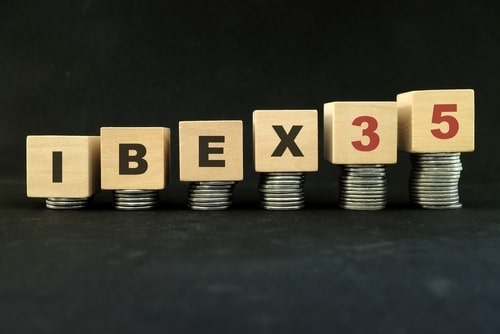
Global Markets Today: IBEX 35, Euribor, Wall Street, Nasdaq and Dow Jones in Focus
Global financial markets are navigating a complex environment marked by shifting monetary policy expectations, mixed economic data, and persistent geopolitical uncertainty. Investors are closely watching major equity indices such as Spain’s IBEX 35 and the leading U.S. benchmarks—Wall Street, the Nasdaq, and the Dow Jones—while also monitoring movements in the Euribor, a key reference rate for millions of European households and businesses.
IBEX 35: Between Domestic Strength and External Pressures
Spain’s IBEX 35 remains one of the most closely followed indices in Europe, reflecting both the resilience of the Spanish economy and its exposure to global market trends. The index has been supported by strong performances in banking, energy, and tourism-related stocks, sectors that continue to benefit from solid domestic demand and improving macroeconomic fundamentals.
Spanish banks, in particular, remain sensitive to interest rate expectations. Any changes in the outlook for European Central Bank (ECB) policy directly influence valuations, given the impact of rates on margins and lending activity. Meanwhile, energy companies are reacting to fluctuations in oil and gas prices, which remain volatile amid geopolitical tensions and supply uncertainties.
Despite periods of volatility, the IBEX 35 has shown relative strength compared to other European indices, supported by better growth prospects for Spain and improving investor sentiment toward southern European markets.
Euribor: A Key Indicator for Europe’s Economy
The Euribor continues to be a focal point for markets and households alike. As the benchmark interest rate for a wide range of mortgages and corporate loans across the eurozone, its trajectory has direct implications for consumption, investment, and overall economic activity.
Recent movements in the Euribor reflect expectations that the ECB will maintain a cautious approach to monetary policy. While inflation has eased compared to previous peaks, it remains above target in several eurozone countries, limiting the scope for rapid rate cuts.
For consumers, elevated Euribor levels mean continued pressure on mortgage payments, while businesses face higher financing costs. For markets, the Euribor serves as a barometer of monetary conditions and future policy direction, influencing both equity and bond valuations across Europe.
Wall Street: Balancing Growth and Rate Expectations
U.S. markets remain at the center of global investor attention. Wall Street is navigating a delicate balance between economic resilience and the prospect of prolonged tight monetary policy. Strong labor market data and steady consumer spending have supported corporate earnings, but higher interest rates continue to weigh on valuations.
The Dow Jones Industrial Average, with its focus on established, blue-chip companies, has benefited from investor demand for defensive and dividend-paying stocks. Industrials, healthcare, and consumer staples have attracted interest as investors seek stability in an uncertain environment.
At the same time, concerns about inflation persistence and fiscal sustainability continue to shape market sentiment, contributing to periodic swings in U.S. equities.
Nasdaq: Technology Under the Spotlight
The Nasdaq remains particularly sensitive to changes in interest rate expectations. As a technology-heavy index, it is highly exposed to movements in bond yields and investor appetite for growth stocks.
Artificial intelligence, cloud computing, and semiconductor stocks continue to drive long-term optimism, but short-term volatility remains elevated. Investors are increasingly selective, favoring companies with strong balance sheets, clear revenue growth, and credible paths to profitability.
Any shifts in Federal Reserve messaging regarding rates or inflation can have an outsized impact on the Nasdaq, making it a key indicator of broader market risk sentiment.
Dow Jones: Stability in Uncertain Times
The Dow Jones continues to play a stabilizing role within U.S. markets. Its composition of large, diversified corporations makes it less volatile than more growth-oriented indices, appealing to investors seeking lower risk exposure.
Performance in the Dow Jones is closely tied to macroeconomic indicators such as industrial production, employment, and consumer confidence. As long as the U.S. economy avoids a sharp slowdown, the index is expected to remain relatively resilient, even amid tighter financial conditions.
Global Factors Shaping Market Direction
Beyond individual indices, several global factors are influencing market movements today. Geopolitical tensions, particularly in key energy-producing regions, continue to affect commodity prices and inflation expectations. Currency fluctuations, driven by diverging monetary policies between central banks, are also impacting multinational companies and cross-border investment flows.
In addition, investors are closely monitoring economic data releases, including inflation figures, GDP growth, and corporate earnings, for signals about the direction of monetary policy and economic momentum.
Outlook: Cautious Optimism With Persistent Volatility
Looking ahead, markets are likely to remain volatile as investors reassess growth prospects and policy expectations. While there are signs of economic resilience in both Europe and the United States, risks related to inflation, interest rates, and geopolitical developments remain elevated.
For investors, diversification and a focus on fundamentals continue to be key strategies. Monitoring benchmarks such as the IBEX 35, Euribor, Wall Street indices, the Nasdaq, and the Dow Jones provides valuable insight into how markets are interpreting the evolving global economic landscape.
Conclusion
Global markets today reflect a world in transition. The IBEX 35 highlights Spain’s improving economic position within Europe, the Euribor signals tight but stabilizing monetary conditions, and U.S. indices such as the Nasdaq and Dow Jones capture the tension between growth opportunities and financial constraints.
As uncertainty persists, staying informed and agile remains essential. Market participants will continue to look to these key indicators for guidance as they navigate an increasingly complex financial environment.
Acerca del autor