AI Is Reshaping the Labor Market: Highly Paid Experts Now Train Machines to Do Their Own Jobs
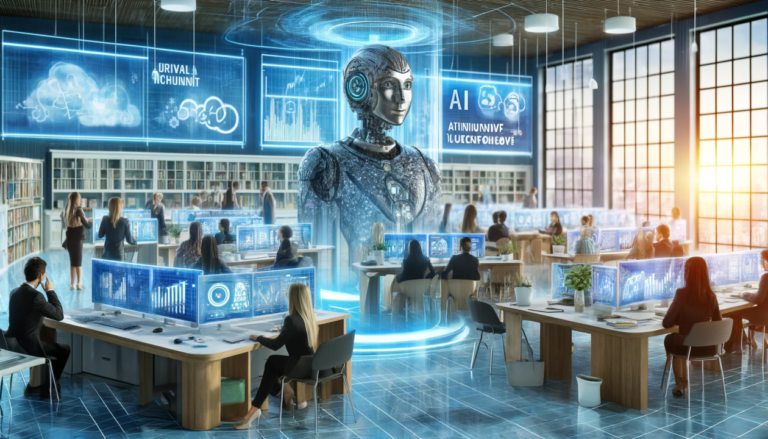
Artificial intelligence is no longer just automating repetitive tasks or low-skilled roles. A profound transformation is underway in the global labor market, where highly paid professionals—engineers, doctors, lawyers, financial analysts, and data scientists—are increasingly being hired to train AI systems that may one day perform large parts of their own jobs.
This paradoxical trend highlights a new phase of the AI revolution: expertise itself has become the raw material powering machine intelligence.
From Automation to Knowledge Transfer
In the early waves of automation, machines replaced manual labor and routine office tasks. Today, the focus has shifted toward cognitive work. Advanced AI models require vast amounts of structured knowledge, domain-specific reasoning, and real-world decision-making skills. To achieve this, technology companies are turning to top-tier professionals to teach machines how experts think.
These specialists are not just labeling data. They are designing workflows, validating outputs, correcting reasoning errors, and embedding professional judgment into AI systems. In fields such as medicine, law, finance, and engineering, the goal is to replicate expert-level decision-making at scale.
According to industry analysts, this shift represents a move from “task automation” to “expertise automation,” fundamentally changing how value is created in the digital economy.
Why Experts Are in High Demand
Ironically, the rise of AI has increased demand for elite human talent—at least in the short to medium term. Companies developing large language models and sector-specific AI tools are competing fiercely for experienced professionals who can translate complex knowledge into machine-readable formats.
Salaries for these roles are often well above market averages. AI trainers with deep domain expertise can earn six-figure incomes, consulting fees, or equity-based compensation, especially in regulated industries where accuracy and accountability are critical.
For many professionals, training AI is not seen as a threat but as a lucrative opportunity to monetize their experience in new ways.
The Risk of Training Your Own Replacement
Despite the financial incentives, the long-term implications raise uncomfortable questions. By teaching machines how to reason, diagnose, analyze, or negotiate, experts may be accelerating the obsolescence of parts of their own profession.
In sectors like customer support, content creation, legal research, and financial analysis, AI systems already outperform junior and mid-level workers in speed and cost efficiency. As models improve, fewer human experts may be needed to supervise or intervene.
Some economists warn that this could hollow out career ladders, reducing opportunities for younger professionals to gain experience, while concentrating wealth among those who helped build the systems early.
A New Role for Human Professionals
Rather than full replacement, many experts believe AI will redefine professional roles. Humans will increasingly act as supervisors, auditors, strategists, and ethical gatekeepers, while machines handle execution and analysis.
This transition mirrors past technological shifts, where new tools initially disrupted jobs but eventually created new categories of work. The difference with AI lies in its speed and scope: change is happening faster than labor markets and education systems can adapt.
As a result, lifelong learning, adaptability, and cross-disciplinary skills are becoming essential for career resilience.
Global Impact and Inequality Concerns
The AI-driven labor transformation is also deepening global inequalities. High-income professionals in advanced economies benefit from AI training roles, while routine cognitive jobs face downward pressure worldwide.
Emerging markets, traditionally reliant on outsourcing knowledge work, may see reduced demand as AI systems replace human labor at scale. At the same time, countries investing heavily in AI education and infrastructure could gain a significant competitive advantage.
Policymakers are now grappling with how to balance innovation with social stability, exploring measures such as reskilling programs, updated labor regulations, and new social safety nets.
The Future of Work in the Age of AI
The fact that experts are training machines to perform their own jobs is not a contradiction—it is a signal of a deeper transformation. Knowledge, once protected by education and experience, is becoming codified, scalable, and increasingly automated.
For professionals, the challenge is no longer whether AI will change their industry, but how quickly they can adapt to working alongside intelligent systems. Those who learn to guide, shape, and govern AI may thrive, while those who resist risk being left behind.
The AI labor revolution is not coming—it is already here, and it is being built by the very experts whose careers it will redefine.

Acerca del autor