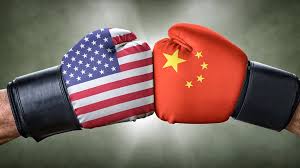
The United States Rallies Allies in a Global Push for Critical Minerals Amid Rising Competition With China
The United States has taken a decisive step to reshape the global supply chain for critical minerals by leading a high-level international summit aimed at reducing China’s dominance in one of the world’s most strategic markets. The initiative reflects growing concern in Washington and among its allies that reliance on China for essential minerals poses serious risks to national security, defense industries, and global trade.
Critical minerals—including lithium, cobalt, nickel, rare earth elements, and graphite—are indispensable for modern economies. They are key components in advanced weapon systems, electric vehicles, renewable energy infrastructure, semiconductors, and high-tech manufacturing. Control over these resources is increasingly viewed not just as an economic advantage, but as a geopolitical lever.
Why Critical Minerals Are Now a Strategic Priority
Over the past two decades, China has built a commanding position across nearly every stage of the critical minerals value chain. It dominates global processing and refining capacity for rare earths, controls significant overseas mining assets, and plays a central role in battery and clean-energy supply chains.
This concentration has raised alarms in the United States, Europe, and Asia. U.S. officials have repeatedly warned that supply disruptions—whether due to geopolitical tensions, trade disputes, or domestic policy decisions in China—could severely impact defense readiness and industrial competitiveness.
The summit, convened by Washington, brings together advanced economies, resource-rich developing nations, and major industrial players with a shared objective: diversifying supply chains, strengthening transparency, and reducing strategic vulnerabilities linked to mineral dependence.
A Coalition of Allies and Partners
Participants in the summit include key U.S. allies such as the European Union, Japan, South Korea, Canada, and Australia, alongside emerging suppliers from Latin America, Africa, and Southeast Asia. The presence of both consuming and producing nations underscores the complexity of the challenge.
The U.S. message is clear: building resilient and secure mineral supply chains requires long-term investment, regulatory cooperation, and shared standards on environmental, social, and governance (ESG) practices. Unlike China’s state-driven model, Washington is promoting a framework based on market principles, transparency, and sustainable development.
This approach is also designed to appeal to countries wary of becoming overly dependent on a single buyer or financier. By offering alternative partnerships, financing mechanisms, and technology transfers, the U.S. hopes to position itself as a credible counterweight to Beijing’s influence.
Defense, Technology, and Economic Security
The stakes are particularly high for the defense sector. Advanced military systems—from fighter jets to missile guidance technologies—depend heavily on rare earth elements and specialty metals. Any disruption in supply could have immediate consequences for national security.
Beyond defense, the race for critical minerals is central to the global energy transition. Electric vehicles, grid-scale batteries, and renewable energy technologies all rely on stable access to these materials. As governments push ambitious decarbonization targets, competition for resources is intensifying.
U.S. officials argue that without coordinated action, China could leverage its dominant position to shape prices, restrict exports, or gain strategic concessions. The summit therefore frames critical minerals as a core pillar of economic security, on par with energy independence and semiconductor manufacturing.
China’s Response and Global Implications
While China has not been directly involved in the summit, its shadow looms large over the discussions. Beijing has consistently defended its role in global mineral markets as the result of efficiency, long-term planning, and investment rather than coercion.
However, recent export controls on certain strategic materials have reinforced concerns among Western governments. These moves are widely interpreted as signals that China is willing to weaponize supply chains in response to geopolitical pressure.
The U.S.-led initiative does not seek to exclude China from global markets entirely. Instead, it aims to reduce excessive concentration and create alternative pathways that prevent any single country from exerting disproportionate influence.
Challenges Ahead
Despite broad alignment among participants, the strategy faces significant hurdles. Developing new mining projects can take a decade or more due to permitting, environmental reviews, and infrastructure constraints. Processing and refining capacity—where China currently dominates—requires substantial capital and technological expertise.
There are also political and social challenges. Local opposition to mining projects, concerns over environmental impact, and labor standards could slow progress. Balancing speed, sustainability, and security will be a defining test for the initiative’s credibility.
Moreover, aligning the interests of diverse countries—each with its own economic priorities and geopolitical calculations—will require sustained diplomatic effort beyond high-profile summits.
A Turning Point in Global Resource Politics
The U.S.-led critical minerals summit marks a broader shift in how governments view globalization. Efficiency and cost are no longer the sole drivers of supply chain decisions; resilience, security, and strategic autonomy now take center stage.
For businesses, investors, and policymakers, the message is clear: critical minerals are becoming a defining issue of the next decade. Companies exposed to clean energy, defense, automotive, and technology sectors will need to reassess supply risks and geopolitical exposure.
As competition between the United States and China increasingly shapes global markets, the battle for critical minerals may prove just as consequential as the race for semiconductors or artificial intelligence.
In that context, the summit represents more than a diplomatic gathering—it signals the emergence of a new era in global economic strategy, where access to raw materials is inseparable from power, security, and influence.

Acerca del autor