Artificial General Intelligence (AGI): The Human-Level Technology That Could Surpass the Brain and Rescue the Global Economy
Artificial General Intelligence (AGI) is rapidly emerging as one of the most transformative and controversial technologies of the 21st century. Unlike today’s narrow artificial intelligence, which is designed to perform specific tasks such as language translation, image recognition, or financial forecasting, AGI refers to a system capable of understanding, learning, and reasoning across any intellectual task that a human can perform. Many experts believe AGI could not only match or surpass the human brain, but also become a powerful engine for economic growth, productivity, and long-term global stability.
What Is Artificial General Intelligence?
AGI is defined as an AI system with human-level cognitive abilities, including reasoning, abstract thinking, problem-solving, creativity, and learning from minimal data. Unlike current AI models, which require vast datasets and operate within narrow domains, AGI would be able to transfer knowledge across fields, adapt to new environments, and improve itself autonomously.
Leading AI labs and technology companies are investing tens of billions of dollars annually in pursuit of AGI, viewing it as the next major leap after deep learning and generative AI. While true AGI has not yet been achieved, rapid advances in large-scale neural networks, multimodal models, and reinforcement learning suggest that progress is accelerating.
AGI and the Human Brain: A Historic Comparison
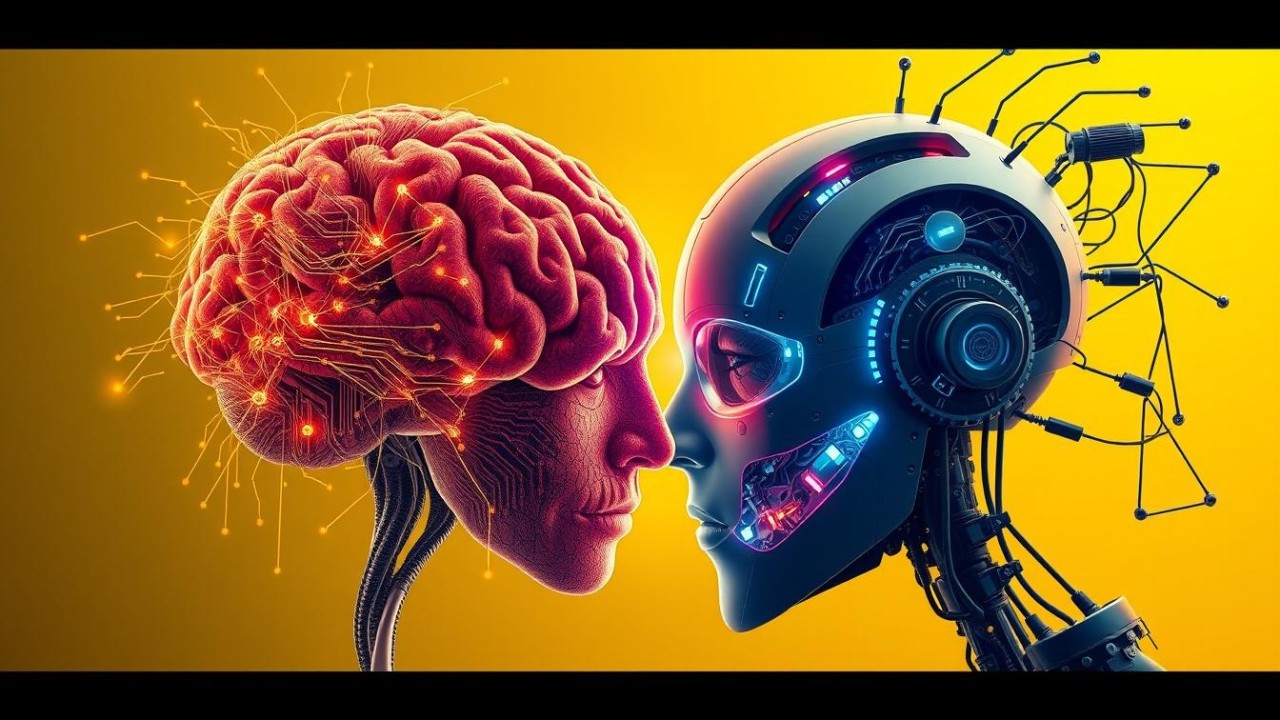
The human brain contains approximately 86 billion neurons, operating with remarkable energy efficiency and adaptability. For decades, this complexity was considered impossible to replicate. However, modern AI systems now contain hundreds of billions of parameters, trained on vast amounts of data and powered by advanced computing infrastructure.
Although today’s AI still lacks genuine consciousness and intuition, its ability to process information at superhuman speed gives AGI a potential advantage. An AGI system could analyze millions of scenarios simultaneously, solve problems without fatigue, and continuously refine its performance. Supporters argue that once AGI reaches critical capability thresholds, it could outperform humans in most economic and scientific tasks.
Economic Growth and Productivity Explosion
One of the strongest arguments in favor of AGI is its potential to revitalize the global economy. Productivity growth in many advanced economies has slowed over the past two decades, contributing to stagnating wages, rising debt, and fiscal pressure on governments. AGI could reverse this trend by acting as a universal cognitive labor force.
Economists estimate that widespread deployment of advanced AI systems could increase global GDP by trillions of dollars annually. AGI could optimize supply chains, automate complex decision-making, accelerate research and development, and dramatically reduce inefficiencies across industries such as manufacturing, healthcare, finance, logistics, and energy.
Transforming Science, Medicine, and Innovation
AGI’s impact would extend far beyond economics. In science and medicine, AGI could analyze vast datasets to discover new drugs, design advanced materials, and model complex biological systems. Tasks that currently take years of human research could be completed in weeks or days.
In healthcare, AGI systems could provide personalized treatment plans, predict disease outbreaks, and assist doctors with diagnostics at unprecedented accuracy levels. This could reduce healthcare costs while improving outcomes, particularly in aging societies facing workforce shortages.
Labor Markets: Disruption and Opportunity
Despite its promise, AGI also raises serious concerns about job displacement and inequality. Unlike previous automation waves that mainly affected manual labor, AGI could disrupt white-collar professions, including law, accounting, engineering, and even parts of scientific research.
However, proponents argue that AGI could ultimately create more value than it destroys. By handling routine cognitive tasks, AGI may free humans to focus on creative, strategic, and interpersonal work. Governments and institutions may need to rethink education, reskilling programs, and even concepts such as universal basic income to ensure a smooth transition.
AGI as a Tool to Address Global Challenges
Beyond economic growth, AGI could help tackle some of humanity’s most pressing challenges. Climate change modeling, energy optimization, food production, and urban planning all involve complex systems that exceed human cognitive limits. AGI could simulate and optimize these systems in real time, enabling more effective and sustainable solutions.
In developing economies, AGI-powered tools could improve access to education, healthcare, and financial services, helping to close global inequality gaps. Supporters see AGI as a force multiplier that could raise overall living standards worldwide.
Risks, Ethics, and Governance
The power of AGI also introduces significant risks. Misaligned objectives, lack of transparency, or concentration of control could lead to unintended consequences. Experts warn that AGI systems must be developed with robust safety mechanisms, ethical frameworks, and international governance.
There are also geopolitical implications. Countries that achieve AGI leadership could gain enormous economic and strategic advantages, potentially reshaping global power dynamics. This has sparked calls for international cooperation and regulation to ensure AGI benefits humanity as a whole rather than a small group of actors.
A Defining Technology of the Century
Artificial General Intelligence represents more than just another technological upgrade—it is a potential civilizational turning point. If developed responsibly, AGI could usher in an era of abundance, solving productivity bottlenecks, accelerating innovation, and stabilizing economies under pressure from aging populations and debt.
Yet its success will depend not only on engineering breakthroughs, but on policy decisions, ethical choices, and social adaptation. Whether AGI ultimately surpasses the human brain and “rescues” the global economy remains uncertain, but one thing is clear: AGI is no longer science fiction. It is rapidly becoming one of the most important economic and technological debates of our time, with consequences that will shape the future of humanity for generations to come.

Acerca del autor