Artificial Intelligence: What It Is and How It Helps Us in Everyday Life
Artificial Intelligence (AI) is no longer a futuristic concept reserved for science fiction or research labs. It has quietly become part of our daily routines, transforming the way we work, communicate, consume information, and make decisions. From personalized recommendations on streaming platforms to advanced medical diagnostics, AI is reshaping industries and redefining productivity. But what exactly is artificial intelligence, and how does it help us in practical terms?
What Is Artificial Intelligence?
Artificial intelligence refers to the ability of machines and software systems to perform tasks that typically require human intelligence. These tasks include learning from data, recognizing patterns, understanding natural language, solving problems, and even making decisions. AI systems rely on algorithms, large datasets, and computing power to simulate human-like reasoning and adaptability.
There are two main categories of AI. Narrow AI, also known as weak AI, is designed to perform specific tasks, such as voice recognition, image analysis, or fraud detection. This is the type of AI most commonly used today. General AI, on the other hand, refers to machines with human-level intelligence capable of performing any intellectual task a person can do. While general AI remains a long-term goal, narrow AI is already delivering significant value across multiple sectors.
How Does AI Work?
At the core of modern AI are technologies such as machine learning and deep learning. Machine learning enables systems to learn from data without being explicitly programmed for every scenario. Deep learning, inspired by the structure of the human brain, uses neural networks to process complex data like images, audio, and text.
AI models improve over time by analyzing large volumes of data, identifying patterns, and adjusting their outputs accordingly. The more high-quality data an AI system processes, the more accurate and efficient it becomes. This ability to learn and scale is what makes AI such a powerful tool for businesses and organizations.
How AI Helps Us at Work
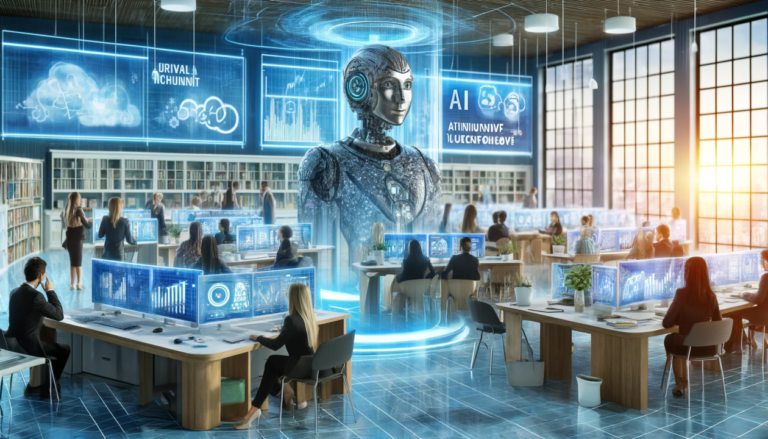
One of the most significant impacts of artificial intelligence is in the workplace. AI helps automate repetitive and time-consuming tasks, allowing employees to focus on higher-value activities that require creativity, strategy, and human judgment.
In sectors such as finance, AI is used to detect fraud, assess credit risk, and optimize investment strategies. In marketing and sales, AI analyzes customer behavior to deliver personalized experiences and improve conversion rates. Human resources teams use AI-powered tools to streamline recruitment, screen resumes, and predict employee turnover.
Rather than replacing humans, AI often acts as a productivity multiplier. Professionals who leverage AI effectively can work faster, make better decisions, and gain a competitive advantage in an increasingly digital economy.
AI in Healthcare: Saving Time and Lives
Healthcare is one of the areas where AI is making the most meaningful contributions. AI systems assist doctors by analyzing medical images, identifying anomalies, and supporting early diagnosis of diseases such as cancer or cardiovascular conditions. Predictive analytics powered by AI help hospitals manage resources, reduce waiting times, and improve patient outcomes.
AI is also accelerating drug discovery by analyzing vast datasets and identifying potential compounds in a fraction of the time required by traditional methods. This not only reduces costs but also brings life-saving treatments to market faster.
Everyday AI: From Smartphones to Smart Cities
Many people interact with artificial intelligence daily without even realizing it. Voice assistants, navigation apps, spam filters, recommendation engines, and smart home devices all rely on AI technologies. These systems are designed to make life more convenient, efficient, and personalized.
On a larger scale, AI plays a crucial role in the development of smart cities. Traffic management systems use AI to reduce congestion, while energy grids leverage predictive models to optimize consumption and reduce emissions. AI-driven insights help governments and organizations make data-informed decisions that improve quality of life.
Challenges and Ethical Considerations
Despite its benefits, artificial intelligence also raises important ethical and social questions. Issues such as data privacy, algorithmic bias, transparency, and job displacement are at the center of the global AI debate. Ensuring that AI systems are fair, accountable, and aligned with human values is essential for building trust and long-term adoption.
Regulation and responsible AI practices are becoming increasingly important as AI technologies continue to evolve. Companies and policymakers must work together to establish frameworks that promote innovation while protecting individuals and society as a whole.
The Future of Artificial Intelligence
Artificial intelligence is not a passing trend; it is a foundational technology that will continue to shape the future of work, education, healthcare, and economic growth. As AI becomes more accessible, individuals and organizations that invest in AI literacy and skills will be better positioned to adapt and thrive.
Understanding what AI is and how it helps us is the first step toward using it responsibly and effectively. When applied thoughtfully, artificial intelligence has the potential to enhance human capabilities, drive sustainable growth, and solve some of the most complex challenges of our time.

Acerca del autor