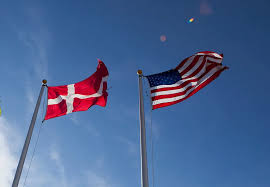
Denmark Forms Greenland Contact Group as Tensions With the U.S. Rise and Allies Prepare to Deploy Troops
Denmark has announced the creation of a high-level contact group on Greenland as diplomatic tensions with the United States intensify over security, sovereignty, and strategic influence in the Arctic. The move comes amid growing geopolitical competition in the region and confirmation that Denmark’s allies are preparing to deploy additional troops as part of a broader effort to reinforce Arctic security.
The Danish government said the new contact group will coordinate policy across defense, foreign affairs, and Arctic governance, while maintaining close dialogue with Greenland’s autonomous government. Officials emphasized that the initiative aims to safeguard regional stability, protect Danish sovereignty, and manage relations with key allies at a time of heightened international attention on the Arctic.
Rising Strategic Importance of Greenland
Greenland has become a focal point of global geopolitical interest due to its strategic location between North America and Europe, its proximity to emerging Arctic shipping routes, and its vast untapped natural resources. Melting ice caps have increased access to minerals, rare earth elements, and potential energy reserves, further intensifying competition among global powers.
The United States has long considered Greenland vital to its national security, particularly due to the presence of the Thule Space Base, a key component of U.S. missile defense and early-warning systems. However, recent disagreements between Washington and Copenhagen over military posture, resource development, and political influence have strained bilateral relations.
Danish officials stressed that the creation of the contact group reflects the need for a unified national strategy that balances alliance commitments with respect for Greenland’s self-rule and local interests.
Allies Prepare Troop Deployments
In parallel with diplomatic efforts, Denmark confirmed that several allied nations are preparing to send troops to reinforce security in and around Greenland. While officials avoided detailing exact numbers or timelines, they indicated that deployments would focus on surveillance, rapid response capabilities, and joint military exercises.
The troop movements are widely seen as part of NATO’s broader strategy to strengthen its presence in the Arctic amid increased Russian and Chinese activity in the region. Analysts note that Arctic militarization has accelerated in recent years, driven by concerns over freedom of navigation, airspace security, and control of critical infrastructure.
Denmark emphasized that the deployments are defensive in nature and aimed at deterrence rather than escalation. Nevertheless, the announcement has sparked debate within Greenland, where some political leaders have expressed concern about becoming entangled in great-power rivalries.
Diplomatic Frictions With Washington
Tensions between Denmark and the United States have reportedly increased over differing visions for Greenland’s future. While both countries are NATO allies, disagreements have emerged regarding the scale of U.S. military expansion, investment priorities, and diplomatic engagement with Greenlandic authorities.
Danish officials have reiterated that any foreign military activity on Greenland must respect Danish sovereignty and be conducted in consultation with both Copenhagen and Nuuk. The new contact group is intended to streamline communication and prevent unilateral actions that could undermine trust.
From Washington’s perspective, Greenland remains central to U.S. Arctic strategy, particularly as climate change reshapes the region’s security landscape. U.S. policymakers argue that enhanced military capabilities are necessary to address emerging threats and ensure stability.
Greenland’s Role and Local Concerns
Greenland’s autonomous government welcomed the establishment of the contact group but emphasized the importance of transparency and inclusion. Greenlandic leaders have repeatedly stated that decisions affecting the island’s security and resources must involve local authorities and reflect the will of its population.
Public opinion in Greenland is divided. While some view increased international attention as an opportunity for economic development and greater global influence, others fear environmental damage, loss of autonomy, and the risk of militarization.
The Danish government acknowledged these concerns, stating that the contact group will serve as a platform for dialogue and conflict prevention, ensuring that Greenland’s interests remain central to policy decisions.
Broader Arctic Security Context
The formation of the contact group comes amid a rapidly evolving Arctic security environment. Russia has expanded its military infrastructure in the High North, while China has declared itself a “near-Arctic state” and increased its economic and scientific presence in the region.
NATO has responded by enhancing cooperation among Arctic member states and increasing joint exercises. Denmark’s initiative aligns with these efforts but also signals a desire to assert greater national control over policy direction.
Security experts note that the Arctic is increasingly viewed as a potential flashpoint where geopolitical competition, climate change, and resource scarcity intersect.
Market and Global Implications
Beyond security concerns, developments in Greenland carry significant economic implications. Investors are closely watching how geopolitical tensions could affect mining projects, rare earth supply chains, and future energy exploration.
Greenland holds some of the world’s largest reserves of rare earth elements, critical for clean energy technologies, defense systems, and advanced electronics. Control over these resources has become a strategic priority for major powers, adding another layer of complexity to the diplomatic landscape.
Conclusion
Denmark’s decision to form a Greenland contact group underscores the growing importance of the Arctic in global geopolitics. As tensions with the United States rise and allied troops prepare to deploy, Copenhagen is seeking to assert strategic clarity, protect sovereignty, and manage alliance dynamics in an increasingly contested region.
While the initiative aims to reduce friction and enhance coordination, it also highlights the delicate balance between security, diplomacy, and local autonomy. As Arctic competition intensifies, Greenland is likely to remain at the center of international attention, shaping the future of transatlantic relations and global security in the High North.

Acerca del autor