Globe and stack with coins. Money makes the world go round
Global Economy in 2026: Key Challenges Shaping Growth, Inflation, and Financial Stability
As the world approaches 2026, the global economy stands at a delicate crossroads. After several years marked by inflation shocks, aggressive monetary tightening, geopolitical tensions, and rapid technological change, governments, central banks, and businesses are preparing for a year that promises both risk and opportunity. Growth is expected to remain positive but uneven, inflation is cooling yet persistent in some regions, and financial stability faces new tests from debt levels and market volatility.
Global Growth Outlook: Slower but More Balanced
According to estimates widely shared by international institutions, global economic growth in 2026 is expected to hover around 2.8%–3.0%, slightly below the long-term average. Advanced economies such as the United States, the eurozone, and Japan are projected to grow at a more modest pace of 1.5%–2.0%, reflecting tighter financial conditions and aging populations. In contrast, emerging markets, led by India and parts of Southeast Asia, could expand by 4.5%–5.5%, continuing to drive global demand.
China, the world’s second-largest economy, remains a key variable. Growth is forecast near 4.0%–4.5%, supported by industrial policy and exports of electric vehicles, batteries, and clean technologies, but constrained by a weak property sector and demographic pressures. Analysts believe that while China will no longer be the explosive growth engine of the past, it will remain central to global supply chains and trade flows.
Inflation: Cooling, but Not Fully Conquered
Inflation, which peaked globally above 8% in 2022–2023, has moderated significantly. By 2026, global inflation is expected to average around 3.5%, closer to central bank targets but still above the ideal 2% in many economies. In the United States, inflation is projected at 2.3%–2.6%, while the eurozone may remain slightly higher at 2.5%–2.8% due to energy costs and wage pressures.
A major concern is services inflation, driven by labor shortages and rising wages. In many advanced economies, unemployment rates remain historically low—around 4% in the U.S. and 6% in the eurozone—giving workers greater bargaining power. This dynamic keeps price pressures alive even as goods inflation eases.
From a positive perspective, policymakers argue that the worst inflationary phase is behind us. Supply chains have largely normalized, shipping costs have fallen more than 60% from their pandemic highs, and energy prices are far below the peaks seen during the height of geopolitical tensions.
Monetary Policy and Interest Rates: A Turning Point
One of the most searched economic keywords heading into 2026 is interest rates. After years of aggressive hikes, central banks are expected to gradually shift toward a more neutral stance. The U.S. Federal Reserve could bring its benchmark rate down to around 3.25%–3.50% by late 2026, while the European Central Bank may settle near 2.5%–3.0%.
However, rate cuts are likely to be cautious. Central banks remain wary of declaring victory over inflation too soon. Any resurgence in commodity prices or geopolitical shocks could quickly change the outlook. In this sense, 2026 may be a year of “data-dependent policy,” with markets reacting sharply to inflation and employment reports.
Debt and Financial Stability Risks
Global debt levels pose one of the most significant risks to financial stability. Total global debt—public and private—now exceeds 330% of global GDP, a historic high. Governments that borrowed heavily during the pandemic face rising interest costs, especially those that refinanced at higher rates.
Emerging markets are particularly vulnerable. Countries with high levels of dollar-denominated debt are exposed to currency volatility and shifts in global capital flows. A stronger U.S. dollar or renewed risk aversion could trigger financial stress in parts of Latin America, Africa, and South Asia.
That said, global banks are generally better capitalized than before the 2008 financial crisis. Stress tests suggest that major financial institutions can withstand moderate shocks, offering some reassurance that systemic risks remain contained.
Geopolitics, Trade, and Fragmentation
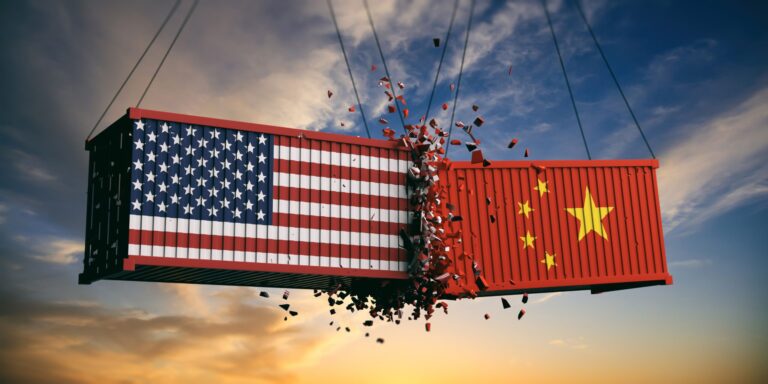
Geopolitical tensions remain a defining feature of the global economy in 2026. Trade fragmentation, tariffs, and strategic competition—particularly between the United States and China—continue to reshape global commerce. Companies are increasingly pursuing “friend-shoring” and “near-shoring”, diversifying supply chains to reduce geopolitical risk.
While this trend improves resilience, it also raises costs. The World Trade Organization estimates that increased trade fragmentation could reduce global GDP by up to 5% over the long term. In the short term, however, countries like Mexico, Vietnam, and India stand to benefit from shifting investment flows.
Technology and Artificial Intelligence: A Bright Spot
One of the most optimistic elements of the 2026 outlook is artificial intelligence (AI) and digital transformation. Investment in AI-related technologies is expected to grow by more than 20% annually, boosting productivity in sectors such as finance, healthcare, manufacturing, and logistics.
Economists argue that AI could add between 0.5 and 1 percentage point to global GDP growth over the next decade if adopted efficiently. While concerns about job displacement remain, many experts believe AI will ultimately create more value than it destroys, especially when paired with education and reskilling initiatives.
Conclusion: Cautious Optimism for 2026
In summary, the global economy in 2026 faces clear challenges: moderate growth, lingering inflation, high debt, and geopolitical uncertainty. Yet the outlook is not bleak. Inflation is largely under control, financial systems are more resilient, and technological innovation offers powerful long-term support.
The prevailing opinion among economists is one of cautious optimism. If policymakers manage risks carefully and avoid major shocks, 2026 could mark a transition toward a more stable and sustainable phase of global economic growth—slower than the boom years, but healthier and more balanced.

Acerca del autor