Greenland’s Future in Focus as Denmark and the U.S. Hold Crucial White House Talks
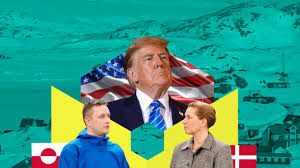
Greenland’s strategic importance has returned to the center of international diplomacy as senior officials from Denmark and the United States convened this week at the White House for a high-level meeting focused on the Arctic island’s future. The talks, described by sources on both sides as “frank and forward-looking,” underscore how Greenland has become a key geopolitical, economic, and security priority amid intensifying global competition in the Arctic.
The meeting brought together U.S. national security and foreign policy officials with representatives of the Danish government, which retains authority over Greenland’s foreign affairs and defense despite the island’s broad self-governing status. While no formal agreements were announced, the discussions highlighted shared concerns over defense, climate change, critical minerals, and the growing presence of rival powers in the Arctic region.
A Strategic Arctic Pivot
Greenland, the world’s largest island, occupies a critical position between North America and Europe, making it a strategic linchpin for transatlantic security. The U.S. has maintained a military presence there for decades, most notably at the Pituffik Space Base (formerly Thule Air Base), which plays a vital role in missile warning, space surveillance, and Arctic defense.
According to U.S. officials familiar with the talks, Washington views Greenland as central to its Arctic strategy as melting ice opens new shipping routes and access to natural resources. “The Arctic is no longer a distant frontier; it is a frontline of strategic competition,” one senior official said. Ensuring stability and cooperation in Greenland is therefore seen as essential to NATO’s northern flank.
Denmark echoed that view, emphasizing that any decisions regarding Greenland’s future must respect international law and the wishes of the Greenlandic people. Danish diplomats stressed that Copenhagen seeks deeper cooperation with Washington, not confrontation, particularly as Arctic security challenges evolve rapidly.
Resources and Economic Interests
Beyond defense, economic considerations featured prominently in the White House discussions. Greenland is believed to hold significant reserves of rare earth elements, uranium, and other critical minerals essential for clean energy technologies, electric vehicles, and advanced electronics. As the U.S. and Europe aim to reduce dependence on Chinese supply chains, Greenland’s mineral potential has gained renewed attention.
U.S. officials reportedly expressed interest in supporting responsible mining projects and infrastructure development, while Denmark highlighted the importance of environmental safeguards and local consent. Greenland’s fragile ecosystem and the concerns of Indigenous Inuit communities remain central to any economic strategy.
Greenland’s own government, based in Nuuk, has repeatedly stated that economic diversification is key to long-term self-sufficiency. Fishing still dominates the island’s economy, accounting for the majority of exports, but leaders see mining, tourism, and renewable energy as paths toward greater financial independence from Denmark.
Climate Change at the Core
Climate change loomed large over the talks, with both sides acknowledging that Greenland is on the front lines of global warming. Rising temperatures are accelerating ice melt, contributing to sea-level rise worldwide while simultaneously increasing accessibility to Arctic resources.
U.S. and Danish officials discussed expanded scientific cooperation, climate monitoring, and investment in resilient infrastructure. Greenland’s melting ice sheet has become a symbol of climate urgency, and both governments signaled support for international efforts to limit emissions and protect Arctic ecosystems.
At the same time, officials recognized the paradox facing Greenland: climate change poses severe risks to traditional ways of life but also creates economic opportunities that could reshape the island’s future. Managing that balance was described as one of the most complex challenges discussed at the White House.
The Question of Self-Determination
Although not officially on the agenda, Greenland’s long-term political status inevitably hovered over the meeting. The island gained self-rule in 2009, giving it control over most domestic affairs and the legal right to pursue independence if its people choose to do so through a referendum.
Danish representatives reaffirmed their commitment to Greenlandic self-determination, while U.S. officials emphasized that Washington respects existing legal frameworks and alliances. The topic remains sensitive, particularly after past statements by U.S. leaders suggesting a stronger American role in Greenland sparked diplomatic tensions.
Analysts note that any shift in Greenland’s status would have profound implications for Arctic governance, NATO cohesion, and global power dynamics. For now, officials on both sides stressed stability and partnership over speculation.
A Signal to Global Rivals
The White House meeting also sent a broader message to other global powers, particularly China and Russia, both of which have increased their Arctic activities in recent years. While China has no Arctic territory, it has declared itself a “near-Arctic state” and pursued research and investment projects across the region. Russia, meanwhile, has expanded its military footprint along the Arctic coastline.
By reinforcing cooperation with Denmark over Greenland, the U.S. aims to demonstrate unity among allies and a shared commitment to keeping the Arctic governed by established rules and norms.
Looking Ahead
While the talks concluded without headline-grabbing announcements, officials described them as a crucial step in aligning U.S. and Danish strategies toward Greenland. Follow-up meetings are expected in the coming months, potentially involving Greenlandic representatives more directly.
As climate change accelerates and geopolitical competition intensifies, Greenland’s role on the world stage is only set to grow. The White House discussions made clear that the island’s future is no longer a regional matter but a global one—shaping security, economics, and climate policy far beyond the Arctic Circle.
ChatGPT puede cometer errores. Considera verificar la información importante. Ver preferencias de cook

Acerca del autor