Nvidia, the World’s Most Valuable Company, Praises Tesla’s Self-Driving Tech: “I Couldn’t Tell If a Neural Network or a Human Was Driving”
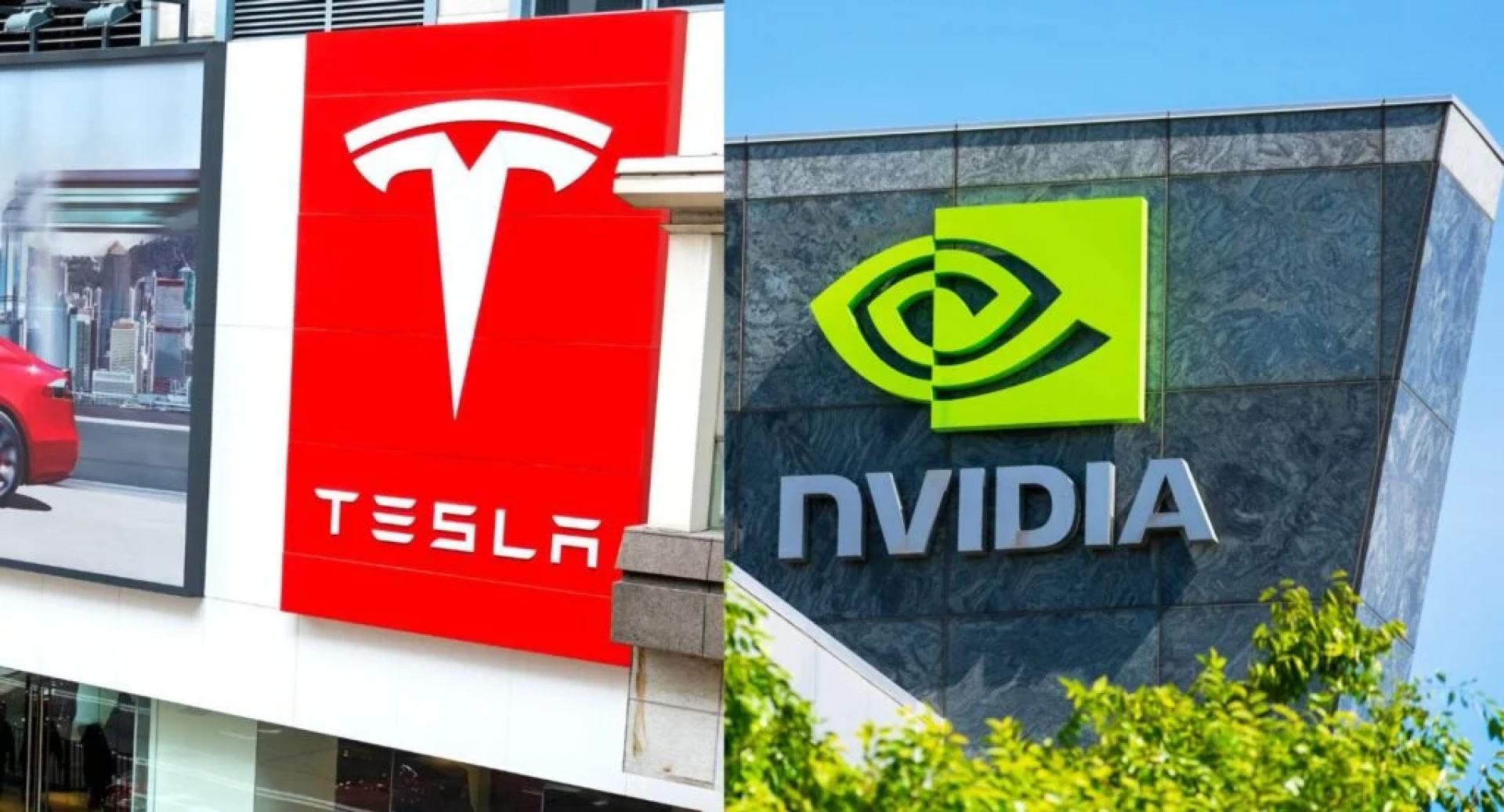
Nvidia, currently the world’s most valuable publicly traded company, has delivered a striking endorsement of Tesla’s autonomous driving technology. In a comment that quickly captured the attention of investors and the tech community, Nvidia CEO Jensen Huang reportedly praised Tesla’s Full Self-Driving (FSD) system, saying he could not tell “whether a neural network or a human was driving.” The remark highlights the rapid convergence of artificial intelligence, autonomous vehicles, and high-performance computing, while underscoring the complementary — and sometimes competitive — roles Nvidia and Tesla play in shaping the AI-driven future.
Nvidia’s Position at the Top of the Global Market
Nvidia’s rise to the top of global equity markets has been fueled by the AI boom, with its GPUs becoming the backbone of modern machine learning, generative AI, and data center infrastructure. The company’s market capitalization has surpassed several trillion dollars, driven by explosive demand from cloud providers, AI startups, governments, and enterprises racing to deploy large-scale neural networks.
Nvidia’s strength lies in its hardware-software ecosystem, combining advanced GPUs, AI accelerators, CUDA software, and networking technologies. These tools power everything from large language models to robotics, medical imaging, and autonomous systems. As a result, Nvidia is not only a chipmaker but a foundational platform for the global AI economy.
Tesla’s Bet on End-to-End AI Driving
Tesla, by contrast, approaches AI from a vertically integrated, real-world deployment perspective. Its Full Self-Driving system relies on end-to-end neural networks trained on billions of miles of driving data collected from Tesla vehicles worldwide. Unlike many competitors that depend heavily on lidar and pre-mapped environments, Tesla emphasizes vision-based AI, using cameras and onboard neural networks to interpret the world in real time.
Tesla’s FSD software, now operating in supervised mode across multiple regions, continues to show rapid improvement in urban navigation, highway driving, and complex traffic scenarios. The comment attributed to Nvidia’s leadership reflects a growing consensus that Tesla’s system is reaching a level of human-like driving behavior, at least in controlled conditions.
Why Nvidia’s Praise Matters
Nvidia is not a casual observer of autonomous driving. The company supplies AI hardware and platforms to numerous automakers and self-driving startups through its Nvidia DRIVE ecosystem. Its systems are used for training autonomous models in data centers and for inference inside vehicles.
That makes Nvidia’s praise of Tesla particularly notable. While Tesla designs its own custom AI chips for in-vehicle computing, it still relies heavily on Nvidia GPUs for training its massive neural networks in data centers. In this sense, the two companies are both partners and rivals, occupying different but overlapping layers of the AI value chain.
Comparing Nvidia and Tesla: Two AI Giants, Different Strategies
Despite both being AI-driven companies, Nvidia and Tesla operate under fundamentally different business models:
- Nvidia focuses on selling high-margin hardware and software platforms that enable AI across industries. Its revenues are largely tied to data centers, cloud computing, and enterprise AI adoption.
- Tesla integrates AI directly into consumer products, primarily electric vehicles, while also expanding into robotics, energy storage, and AI training infrastructure.
Nvidia benefits from a diversified customer base and recurring demand for computing power, while Tesla takes on greater execution risk by deploying AI in safety-critical, real-world environments. However, Tesla also gains a powerful advantage: massive proprietary data, which continuously improves its neural networks.
Financial Scale and Growth Trajectories
From a financial perspective, Nvidia currently dwarfs most companies in terms of profit margins and cash generation, benefiting from premium pricing and limited competition in advanced AI chips. Tesla, while one of the world’s most valuable automakers, operates in a capital-intensive industry with tighter margins and cyclical demand.
Yet Tesla’s long-term valuation thesis increasingly rests on its AI and autonomy ambitions, rather than car sales alone. If Tesla succeeds in scaling autonomous driving, robotaxis, or humanoid robotics, its revenue model could shift dramatically — potentially rivaling high-margin software businesses.
The Future of AI and Autonomous Systems
The exchange of praise between Nvidia and Tesla underscores a broader trend: the future of AI will be shaped by both infrastructure providers and real-world deployers. Nvidia supplies the computational foundation, while Tesla demonstrates how large neural networks can operate reliably in complex, unpredictable environments.
Investors and analysts increasingly view the two companies as cornerstones of the AI revolution, each reinforcing the other’s success. Nvidia’s chips enable Tesla’s training breakthroughs, while Tesla’s achievements validate the real-world power of large-scale neural networks — driving further demand for AI computing.
A Signal to Markets
For markets, Nvidia’s endorsement of Tesla’s self-driving technology sends a powerful signal. It suggests that autonomous driving is moving closer to human-level performance, while reinforcing confidence in AI as a transformative economic force. As AI adoption accelerates across industries, both Nvidia and Tesla appear positioned to remain at the forefront of innovation, shaping not only the future of transportation but the broader trajectory of intelligent machines.
In an era defined by artificial intelligence, the moment when even the world’s most valuable AI company struggles to distinguish between a human driver and a neural network may prove to be a milestone — not just for Tesla, but for the entire AI-driven global economy. 🚀🤖

Acerca del autor