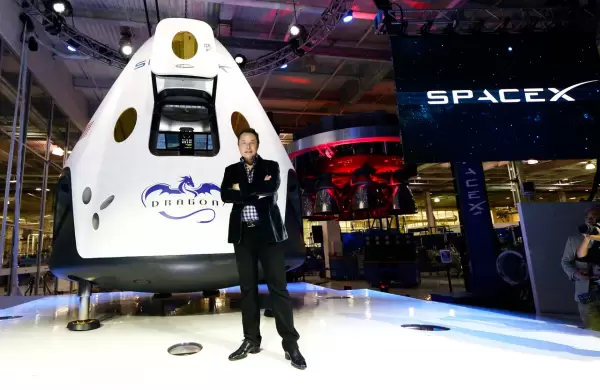
SpaceX Targets 2026 IPO to Raise Over $30 Billion, Marking One of the Biggest Aerospace Public Offerings Ever
SpaceX, the private aerospace company founded by Elon Musk, is reportedly preparing for a potential initial public offering (IPO) in 2026, aiming to raise more than $30 billion in fresh capital. If confirmed, the move would rank among the largest IPOs in history, not only within the aerospace sector but across global financial markets, signaling a major turning point for the commercialization of space.
A Landmark IPO for the Space Economy
Founded in 2002, Space Exploration Technologies Corp. (SpaceX) has remained privately held for more than two decades, relying on private funding rounds to finance its ambitious goals. Over the years, the company’s valuation has surged dramatically, with secondary market estimates placing SpaceX above $150 billion, driven by its dominance in rocket launches, satellite broadband, and government space contracts.
A 2026 IPO could push SpaceX’s valuation significantly higher, depending on market conditions, revenue growth, and investor appetite for space-related stocks. Raising over $30 billion would provide the company with substantial financial firepower to accelerate long-term projects that require massive capital investment.
Why SpaceX Is Considering Going Public
One of the key motivations behind a potential IPO is funding. SpaceX is currently investing heavily in several capital-intensive initiatives, including:
- Starship, its fully reusable next-generation rocket designed for missions to the Moon and Mars
- Starlink, its global satellite internet network
- Expansion of launch infrastructure in the United States and abroad
Starship alone is expected to cost tens of billions of dollars to fully develop and scale. While private funding has been sufficient so far, an IPO would allow SpaceX to tap public markets and diversify its funding sources without relying solely on venture capital and private equity.
Starlink: The Financial Engine
Many analysts believe that Starlink will play a central role in the IPO story. The satellite internet business already operates thousands of satellites in low Earth orbit and serves customers across North America, Europe, Latin America, and parts of Asia and Africa.
Starlink is projected to generate billions of dollars in annual revenue in the coming years, with strong demand from rural users, maritime and aviation sectors, and governments seeking secure communications. Some market observers speculate that SpaceX could either spin off Starlink ahead of the IPO or use its revenue growth as a core pillar of the company’s public valuation.
Market Impact and Investor Interest
A SpaceX IPO would likely attract massive global investor interest, particularly from institutional investors seeking exposure to the fast-growing space economy, which is expected to surpass $1 trillion in value over the next two decades.
For public market investors, SpaceX would offer rare access to a company that combines:
- Predictable revenue from government contracts (including NASA and the U.S. Department of Defense)
- Commercial launch services with a strong competitive moat
- High-growth technology through satellite communications
However, risks remain. SpaceX’s long-term vision, especially Mars colonization, involves projects that may not be profitable for many years, potentially clashing with short-term expectations of public shareholders.
Elon Musk and Governance Questions
Another key issue surrounding a potential IPO is governance. Elon Musk is known for maintaining tight control over his companies, and investors may closely examine voting structures, transparency, and leadership commitments. Balancing Musk’s long-term vision with the demands of public markets will be a critical factor in the success of the offering.
A Defining Moment for SpaceX
If SpaceX proceeds with a 2026 IPO, it would mark a defining moment not only for the company but for the entire aerospace industry. Going public could transform SpaceX from a groundbreaking private innovator into a cornerstone of global capital markets, reshaping how investors participate in humanity’s expansion into space.
Whether the IPO ultimately materializes as planned will depend on market conditions, regulatory considerations, and strategic priorities. But one thing is clear: a SpaceX public debut would be one of the most closely watched financial events of the decade, underscoring the growing convergence of technology, finance, and the future of space exploration.

Acerca del autor