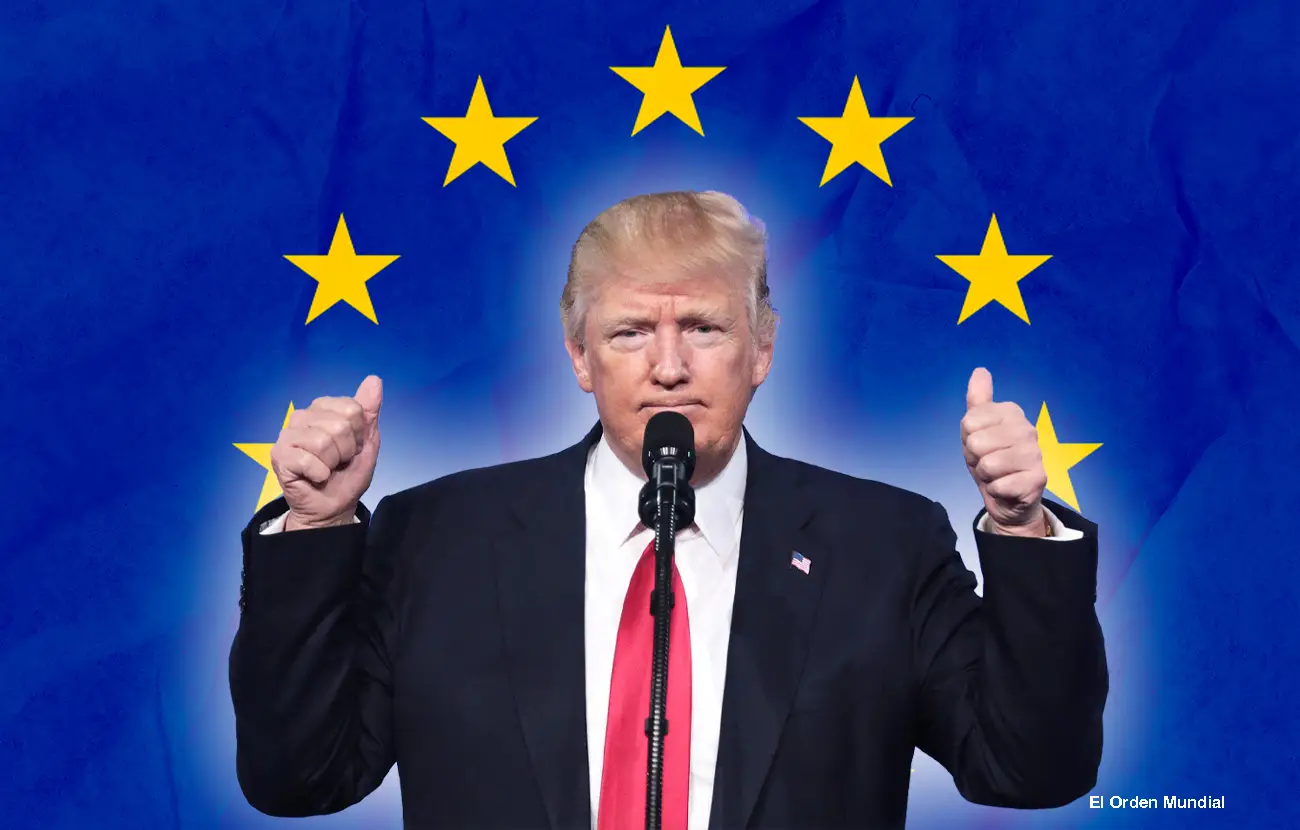
The Year of Tariffs: How Trump’s Trade War Tested Global Commerce and the Economy Proved More Resilient Than Expected
In retrospect, the year dominated by tariffs and aggressive trade policy marked one of the most controversial chapters in modern global economic history. When former U.S. President Donald Trump escalated tariffs on hundreds of billions of dollars’ worth of imports, many economists warned of an imminent slowdown, soaring consumer prices, and a breakdown of global trade flows. Yet, despite the initial shock and intense uncertainty, the global economy—and particularly the U.S. economy—proved more resilient than most forecasts anticipated.
What became known as “The Year of Tariffs” was not without costs. Prices rose in certain sectors, supply chains were disrupted, and volatility increased across financial markets. However, the broader macroeconomic outcome revealed an unexpected capacity for adaptation, diversification, and growth, challenging the most pessimistic predictions.
A Trade War Begins: Tariffs as a Strategic Weapon
The tariff strategy focused primarily on correcting trade imbalances, protecting domestic manufacturing, and pressuring key trading partners—most notably China—to renegotiate trade terms. By mid-year, the United States had imposed tariffs ranging from 10% to 25% on more than $350 billion worth of Chinese imports, covering electronics, machinery, steel, aluminum, and consumer goods.
China responded with retaliatory tariffs on U.S. exports, particularly agricultural products such as soybeans, corn, and pork. At the height of the trade conflict, nearly 60% of global trade flows were affected by some form of tariff or trade restriction, according to international trade estimates.
Despite this escalation, global trade did not collapse. Instead, it adjusted.
Inflation and Consumer Prices: Less Pain Than Expected
One of the biggest fears surrounding the tariff wave was runaway inflation. Early projections suggested that U.S. consumer prices could rise by 1.5% to 2% annually as a direct result of higher import costs. In reality, the impact proved far more moderate.
- Core inflation increased by approximately 0.3% to 0.4%, according to consumer price data.
- Average household costs linked directly to tariffs were estimated at $500–$700 per year, significantly lower than initial worst-case scenarios.
- Many retailers absorbed part of the costs through margin compression, while others diversified supply chains to lower-cost countries.
Crucially, wage growth—running at around 3% to 4% annually during the period—helped offset higher prices, preserving consumer purchasing power.
Corporate Adaptation and Supply Chain Resilience
Rather than grinding to a halt, global supply chains evolved. Companies accelerated diversification strategies, shifting production away from single-country dependence. Vietnam, Mexico, India, and parts of Eastern Europe emerged as alternative manufacturing hubs.
By the end of the year:
- U.S. imports from China declined by nearly 15%.
- Imports from Southeast Asia rose by 20% to 25% in key manufacturing categories.
- Nearshoring and reshoring investment in the U.S. increased, with domestic manufacturing investment growing by approximately 6% year-over-year.
This restructuring, while costly in the short term, improved long-term resilience and reduced geopolitical risk exposure for multinational corporations.
Financial Markets: Volatility Without Collapse
Equity markets reacted sharply at first. Trade-related headlines triggered repeated sell-offs, particularly in industrial, technology, and agricultural stocks. The S&P 500 experienced several corrections of 5% to 10%, while industrial exporters underperformed early in the year.
However, markets recovered as earnings resilience became evident:
- By year-end, major U.S. stock indices finished up between 12% and 18%, supported by strong corporate profits.
- Export-heavy firms adapted pricing models, passed on limited cost increases, and leveraged currency fluctuations to remain competitive.
- The U.S. dollar strengthened modestly, helping offset import inflation.
Investors ultimately rewarded companies that demonstrated flexibility rather than those most exposed to global trade volume.
Economic Growth Defies Expectations
Perhaps the most surprising outcome was economic growth itself. Forecasts early in the trade war predicted U.S. GDP growth could fall below 1.5%. Instead:
- The U.S. economy expanded by approximately 2.3% to 2.6%, outperforming expectations.
- Unemployment remained near historic lows at around 3.5% to 3.8%.
- Consumer spending continued to rise at a healthy pace of 2.5% annually.
Globally, growth slowed modestly but avoided recession. World GDP growth hovered near 3%, with emerging markets absorbing much of the trade redirection.
Agriculture and Industry: Short-Term Pain, Long-Term Adjustment
U.S. farmers faced some of the most immediate consequences, as Chinese tariffs reduced agricultural exports by nearly 20% in certain categories. Commodity prices, including soybeans, dropped between 10% and 15% at their lowest point.
However, government support programs and new export markets mitigated the damage:
- Federal aid programs injected billions of dollars into rural economies.
- U.S. agricultural exports diversified toward Latin America, Southeast Asia, and the Middle East.
- By the following year, export volumes partially recovered, narrowing losses significantly.
Meanwhile, U.S. steel and aluminum producers benefited from protection, with domestic output rising by 5% to 8%, supporting employment in key industrial regions.
A Positive Reassessment: Strategic Pressure as a Catalyst
From a longer-term perspective, the tariff strategy forced uncomfortable but necessary conversations about global trade fairness, intellectual property protection, and overreliance on single-country supply chains. While tariffs were a blunt instrument, they succeeded in pushing trade reform to the center of global economic diplomacy.
Key positives include:
- Accelerated supply chain diversification.
- Renewed focus on domestic manufacturing capacity.
- Greater awareness of strategic economic vulnerabilities.
- Stronger negotiating leverage in subsequent trade agreements.
Rather than weakening the economy, the trade war stress-tested it—and revealed structural strengths.
Conclusion: An Economy That Bended, Not Broke
The year of tariffs demonstrated that modern economies are more adaptable than conventional wisdom often assumes. While costs were real and disruptions unavoidable, the feared collapse of global commerce never materialized. Instead, businesses innovated, consumers adjusted, and markets recalibrated.
In hindsight, the economy’s response was not just resilient—it was instructive. The experience showed that measured pressure, when combined with economic fundamentals such as strong employment, rising wages, and corporate flexibility, can be absorbed without derailing growth.
Keywords in English: Trump tariffs, trade war impact, global commerce, economic resilience, inflation effects, supply chain diversification, market volatility, GDP growth, trade policy.
If quieres, puedo adaptar esta noticia a un enfoque más financiero, más político o más orientado a mercados bursátiles, o incluso prepararla en formato editorial de opinión.

Acerca del autor