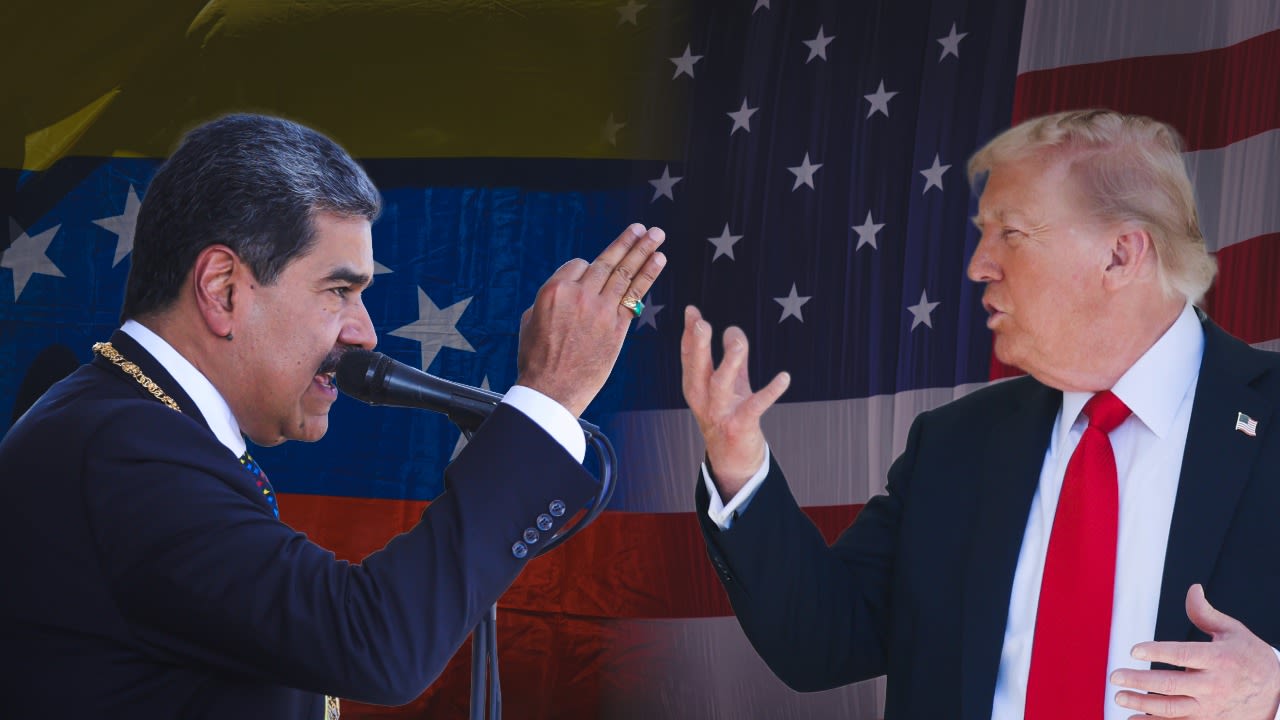
Former U.S. President Donald Trump has sparked global shockwaves after claiming that American forces captured Venezuelan President Nicolás Maduro and his wife, Cilia Flores, during what he described as a direct U.S. military operation inside Venezuela. The announcement, made during a public appearance and later amplified on social media, has triggered intense international reaction, widespread media scrutiny, and urgent questions about the legality, credibility, and consequences of such an action.

4
Trump’s Announcement and Key Claims
According to Trump, U.S. special forces carried out a targeted strike aimed at “ending the Maduro regime once and for all.” He asserted that Maduro and Flores were taken into custody during the operation, describing it as a “precision mission” designed to avoid civilian casualties. Trump framed the alleged capture as a decisive moment in U.S. foreign policy toward Latin America, claiming it would “restore democracy and stability to Venezuela.”
However, no official confirmation has been issued by the U.S. Department of Defense, the White House, or senior military officials. Current U.S. authorities have not corroborated Trump’s statements, and several analysts have emphasized that such an operation would represent one of the most dramatic escalations in U.S.–Venezuela relations in decades.
Lack of Independent Verification
As of now, independent verification of Maduro’s capture is absent. Venezuelan state media continues to broadcast regular programming, and no official statement has confirmed that the president or first lady are in U.S. custody. Government-linked social media accounts in Venezuela have dismissed Trump’s remarks as “disinformation” and “psychological warfare.”
International news agencies and intelligence experts caution that extraordinary claims of this magnitude require substantial evidence. Without confirmation from current U.S. officials or neutral international observers, the situation remains highly uncertain.
Immediate Reactions in Venezuela
Inside Venezuela, the alleged announcement has fueled confusion and anxiety. Reports from Caracas suggest increased security around government buildings, military installations, and strategic infrastructure. Supporters of the ruling party have organized demonstrations accusing the United States of attempted regime change, while opposition groups have urged calm and called for verified information before drawing conclusions.
Economists warn that even unconfirmed reports of a foreign military operation could worsen Venezuela’s already fragile economy, triggering currency volatility, supply disruptions, and renewed capital flight.
International and Regional Response
Governments across Latin America, Europe, and Asia have reacted cautiously. Several countries have called for respect for Venezuelan sovereignty and urged all parties to avoid escalation. The United Nations has not confirmed any operation but emphasized the importance of diplomacy, international law, and peaceful conflict resolution.
Key U.S. allies privately expressed concern over the implications of a unilateral military action, especially if conducted without international backing or congressional authorization. Analysts note that a confirmed capture of a sitting head of state would set a powerful precedent with far-reaching geopolitical consequences.
Legal and Political Implications for the United States
If Trump’s claim were proven true, the legal ramifications would be enormous. Capturing a foreign head of state during a military operation raises complex questions under international law, including sovereignty, the use of force, and the treatment of detainees.
Domestically, the issue would ignite intense debate in Washington. Lawmakers would demand clarity on who authorized the operation, under what legal framework it was conducted, and whether it aligns with U.S. constitutional and international obligations. Legal experts stress that any such mission would typically require coordination with Congress and current executive authorities.
Trump’s Broader Political Strategy
Observers note that Trump’s announcement comes amid heightened political polarization and ongoing debates about U.S. foreign policy strength. By portraying himself as decisive and uncompromising toward authoritarian leaders, Trump appears to be reinforcing a long-standing narrative that emphasizes military power and hardline diplomacy.
Supporters praise the claim as evidence of resolve against regimes accused of corruption, human rights abuses, and narcotics trafficking. Critics, however, argue that unverified statements risk destabilizing international relations and undermining U.S. credibility abroad.
Impact on Global Markets and Energy
The news has already rippled through global markets. Venezuela holds some of the world’s largest proven oil reserves, and any confirmed military action involving its leadership could affect oil prices, regional energy supplies, and sanctions policy. Market analysts warn that uncertainty alone can drive volatility, particularly in energy and emerging-market assets.
What Happens Next?
At this stage, the world is waiting for official confirmation or denial from current U.S. authorities and verifiable evidence from independent sources. Diplomats expect emergency consultations if the claim escalates or is substantiated. Until then, experts urge caution, noting that misinformation during geopolitical crises can spread rapidly and inflame tensions.
Whether Trump’s announcement proves accurate, exaggerated, or false, it has already succeeded in dominating headlines and reigniting debate over U.S. interventionism, regime change, and the future of Venezuela.
Conclusion
Trump’s claim that U.S. forces captured Nicolás Maduro and his wife during a military attack on Venezuela represents one of the most dramatic and controversial geopolitical assertions in recent years. With no official confirmation and conflicting signals from Caracas, the situation remains fluid. As governments, markets, and citizens await verified information, the episode underscores the fragility of global stability in an era where words alone can move nations, economies, and public opinion.
Acerca del autor