Trump Does Not Rule Out Using Military Force to Take Control of Greenland, Sparking Global Concern
Former U.S. President Donald Trump has once again thrust Greenland into the global spotlight after refusing to rule out the use of military force as a means to bring the strategically vital Arctic territory under American control. The remarks have reignited international debate over U.S. foreign policy, Arctic security, and the growing geopolitical competition for influence in the High North.
Speaking in a recent interview, Trump reiterated his long-standing interest in Greenland, describing the massive island as “critical to U.S. national security” and suggesting that all options remain on the table if American interests were threatened. While stopping short of explicitly calling for military action, his refusal to dismiss the possibility has drawn sharp reactions from allies and analysts alike.
Greenland’s Strategic Importance in the Arctic
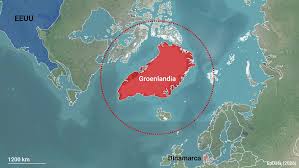
Greenland, an autonomous territory within the Kingdom of Denmark, occupies a uniquely strategic position between North America and Europe. As climate change accelerates ice melt in the Arctic, the region is becoming increasingly accessible, opening new shipping routes and exposing vast reserves of untapped natural resources.
The island is believed to hold significant deposits of rare earth elements, critical minerals essential for advanced technologies, renewable energy systems, and military hardware. In addition, Greenland’s location makes it a key asset for missile defense systems, early-warning radar installations, and control over Arctic air and sea routes.
The United States already maintains a military presence in Greenland through Thule Air Base, now known as Pituffik Space Base, which plays a vital role in U.S. space surveillance and missile warning capabilities. Analysts argue that this existing footprint underscores Washington’s long-term strategic interest in the island.
Trump’s History With Greenland
Trump’s interest in acquiring Greenland is not new. During his presidency, he openly floated the idea of purchasing the territory, comparing it to historic U.S. land acquisitions such as Alaska. At the time, Danish and Greenlandic leaders firmly rejected the proposal, calling it “absurd” and emphasizing that Greenland is not for sale.
Those comments led to diplomatic friction between Washington and Copenhagen, culminating in Trump briefly canceling a state visit to Denmark. While the issue faded from headlines, Trump’s latest remarks suggest that Greenland remains part of his broader strategic worldview, particularly as global power competition intensifies.
International Reaction and Diplomatic Fallout
Danish officials responded swiftly, reiterating that Greenland’s sovereignty is not negotiable and that any suggestion of military action is unacceptable. Greenland’s government also emphasized the island’s right to self-determination, stressing that its future will be decided solely by its people.
European leaders expressed concern that such rhetoric could undermine NATO unity at a time when transatlantic cooperation is already under strain. “Any threat of force between allies is deeply troubling,” said one senior European diplomat, noting that Denmark is a long-standing NATO member.
Russia and China, both increasingly active in the Arctic, are closely monitoring developments. Moscow has expanded its military infrastructure across the Arctic in recent years, while Beijing has declared itself a “near-Arctic state” and invested heavily in polar research and resource exploration.
Implications for Arctic Security and Global Markets
From a strategic perspective, Trump’s comments highlight the growing militarization of the Arctic. As competition for influence, resources, and shipping lanes intensifies, the region is rapidly evolving from a remote frontier into a key theater of global power politics.
Financial markets are also paying attention. Any escalation of tensions involving Greenland could have implications for defense spending, critical minerals supply chains, and Arctic infrastructure investment. Companies involved in rare earth mining, energy exploration, and defense technology may face increased volatility as geopolitical risk premiums rise.
Investors have already grown wary of supply chain vulnerabilities tied to critical minerals, many of which are currently dominated by China. Greenland is often cited as a potential alternative source, making its political status and security environment a matter of economic as well as strategic importance.
Political Calculations and Domestic Impact
In the U.S., Trump’s remarks are likely to resonate with segments of his political base that favor a more assertive foreign policy and view Arctic dominance as essential to national security. Supporters argue that rivals such as China and Russia are aggressively expanding their influence in the region, and that the United States must act decisively to protect its interests.
Critics, however, warn that such statements risk damaging alliances and could escalate tensions unnecessarily. They argue that cooperation, not confrontation, is the most effective way to address Arctic challenges, particularly in areas such as climate change, search and rescue operations, and environmental protection.
A Signal to the World
Whether or not military action is a realistic scenario, Trump’s refusal to rule it out sends a powerful signal. It underscores how strategic competition is reshaping global politics, turning previously overlooked regions like Greenland into focal points of international rivalry.
For now, Greenland remains firmly under Danish sovereignty, and any change to its status would require extensive diplomatic negotiations and the consent of its population. Yet the renewed attention highlights how the Arctic’s growing importance is likely to keep Greenland at the center of geopolitical debates for years to come.
As climate change, resource competition, and great-power rivalry converge in the far north, the question of Greenland’s future is no longer a theoretical one—but a defining issue in the next phase of global geopolitics.

Acerca del autor